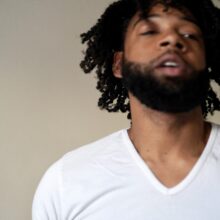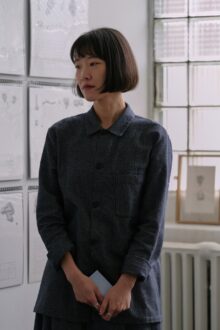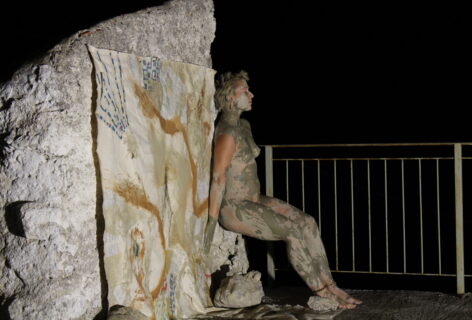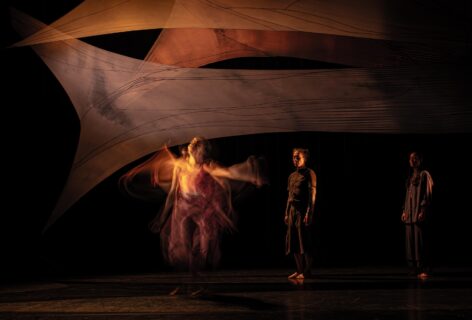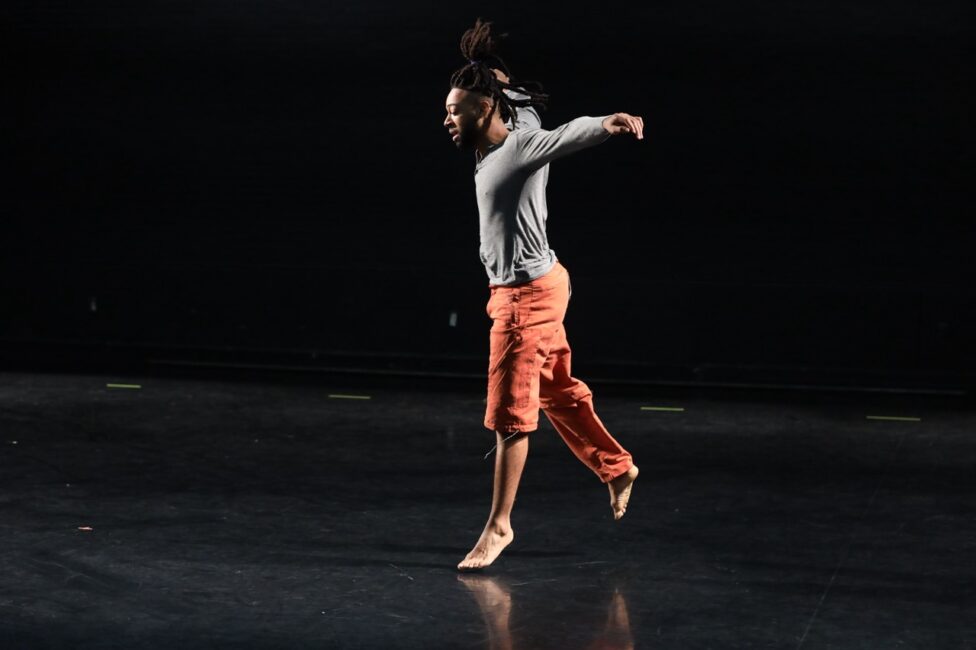
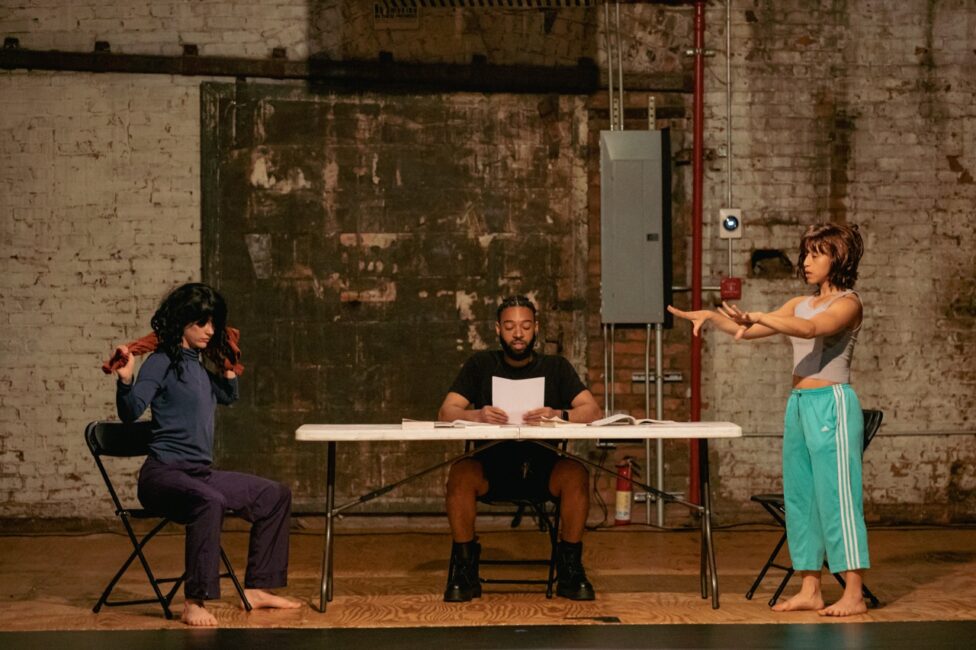
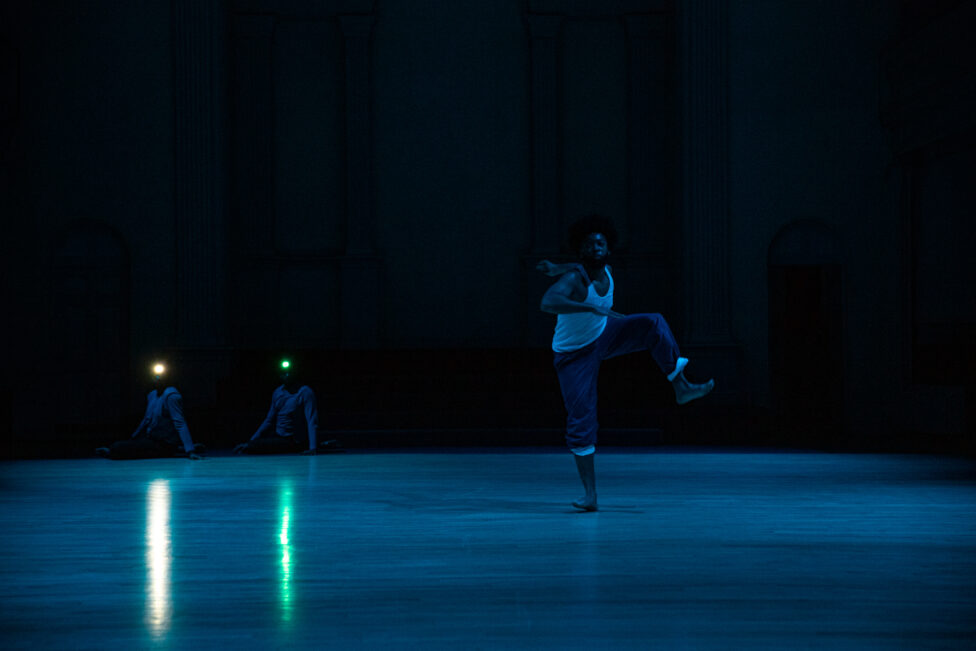
My first encounter with Wendell Gray II’s choreography was when he presented his work Tell Me the Truth last year. I still vividly remember various geometric floor patterns with specific movement vocabularies that two dancers (Wendell himself and Maxi Hawkeye Canion) engaged in unison and a sharp, slower yet physically fierce solo by Camille Phelps. I wondered how his invigorating choreographic choices might also be conceptually charged, and I wanted to hear more about his ways of thinking.
Wendell initiated this conversation with Chang Yuchen whose practices span from drawing and writing to teaching and performance. And their dialogues were ladened with mutual curiosities and respects. As I get to read the transcription of their conversation, I find both of them to be deep thinkers who use their respective artistic practices to ask more and more questions. Maybe what I sensed in Wendell’s piece was about his inquisitive nature. In a society where the spaces for imagination are becoming less and less, I am inspired by the drive and curiosities Wendell and Yuchen showed in this conversation.
-Takahiro Yamamoto, CC Editor
This article has been edited for the purpose of publication.
Wendell Gray II
I think I did want to speak a little bit, maybe about how you got into what you do now. I remember you telling us your father is an artist. Your mom is an artist. As of recent, y’all made that beautiful book together. Which I still- I want a copy. I have to go and find it on your website or something.
Chang Yuchen
Yeah, I think I have a very complicated and ongoing relationship with my craft. I was trained in a very traditional way, in the tradition of Soviet Union Revolutionary Realism, because that’s how Chinese art education has been since 1952. Konstantin Maksimov, a Soviet Union expert, came to Beijing and established this educational framework. Its foundation, Sumiao (素描) is a style of drawings that’s supposed to train artists to be able to portray really chiseled and masculine figures of major historical themes: the workers, peasants, and soldiers(工农兵)
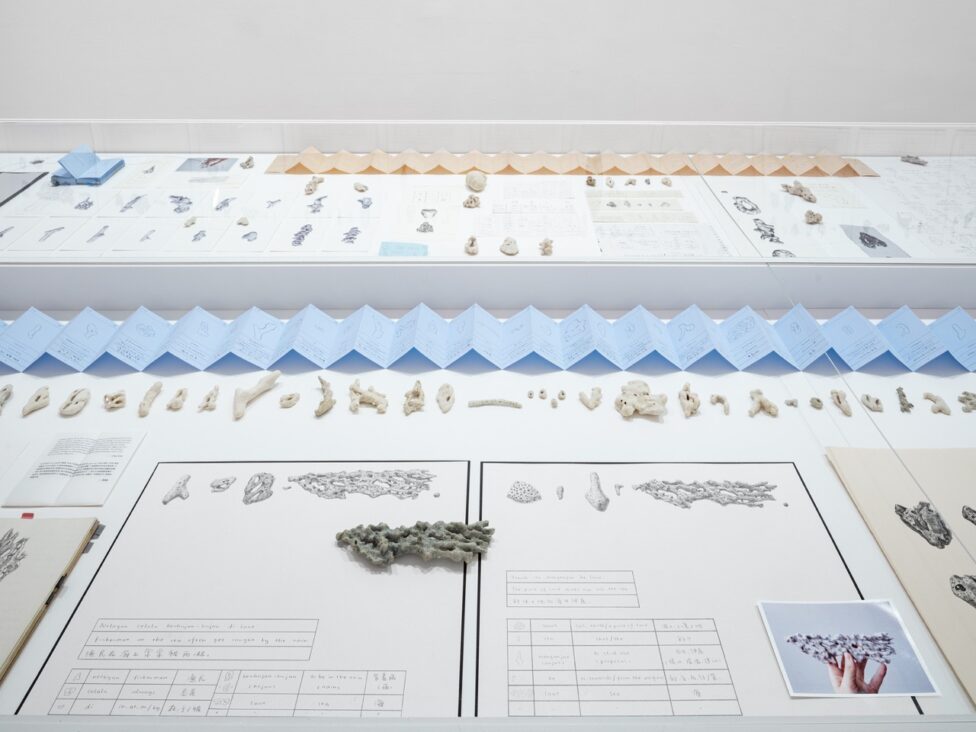
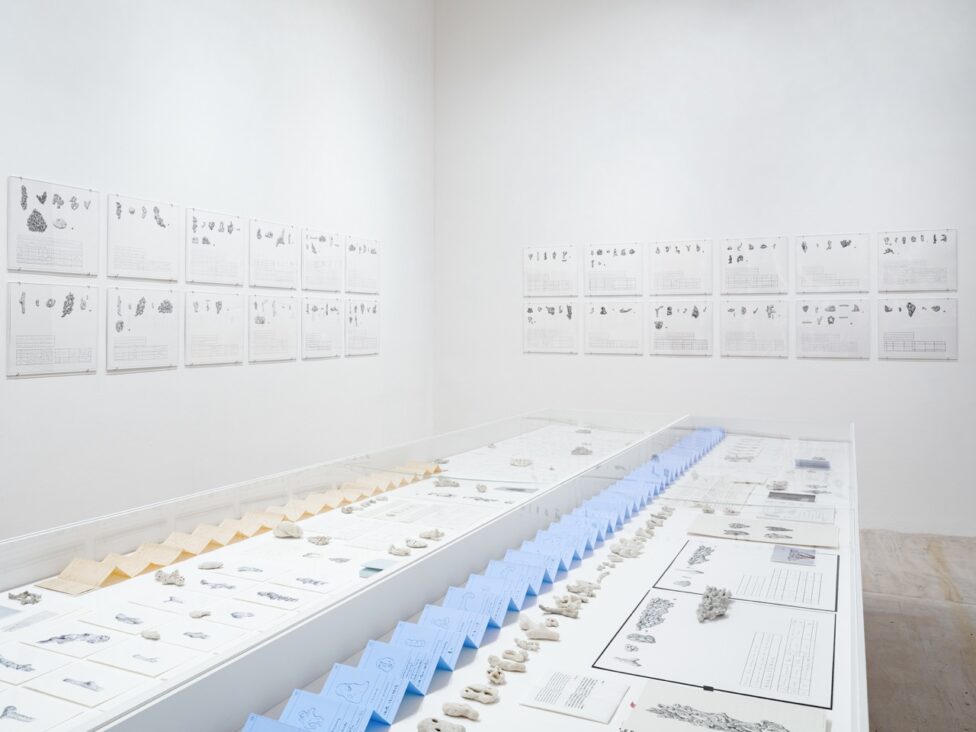
However, I kind of got stuck in the preparation because I actually fell in love with drawing itself, and I never really moved on. But it’s not considered the real thing. Usually, at museums, you see painting and sculpture on the wall. Drawing is in glass cases because it’s a secondary material. It’s usually a draft for painting or sculpture. But I’ve always just been really attached to this process and this media. And I’m lucky to have encountered corals, because I had struggled with what to draw for some time. Because there’s no workers, peasants, and soldiers that I felt compelled to portray. So I have this skill, but I really don’t have the subject matter that it was designed for. But when I encountered coral in 2019, it was just a perfect object to be drawn with graphite, because of the texture and the datedness and the dryness and the monochromatic-ness. I felt, “I have to draw this.” I actually started drawing them before I realized this can become a project with a conceptual dimension. In the beginning, I was just obsessed with tracing their shapes and pores.
WG
Wow, it’s always meant to be this kind of in-between space and almost a placeholder for the other thing. But that’s kind of where you’re finding a lot of pleasure in that practice. And very clear in relation to how you grew up.
I relate to this thing of skill and doing something really well, and that being the most important thing at times, which I feel growing up sometimes in a similar way. My mom is a theater teacher and also works with media, and has been all my life. She got a job in Atlanta when I was like six years old, basically to teach at this performing arts elementary school. So when she got the job, they were like, “You can bring your son too.” And I was going to the first grade, so we moved there. Ever since then, I’ve been in arts programs. At the school, I got to try out everything: dance, music, acting. I was never a crafty person, like being good with drawing or making things with my hands. So I was in the performing arts, but I started to focus more on dance and music in high school. In a way because my mom did theater, I was like, “All right, she already got that down. I need to go find this other thing and find myself in the work.” I also went to a dance studio that was pretty strict and really good–a lot of things were about technique and striving for perfection. You’re trying to nail something down.
CY
Yeah.
WG
So much of my time since leaving school has been like, “How do I hold that skill, but also put it in relation with the world, or care about it?” Not just the fact that it’s pretty or the fact that it’s virtuosic, but that it actually does something. So I kind of always hold that, which is also in relation to a “see me, don’t see me” desire that operates in my work. I can have this skill, but then I can also appreciate an opposition from it.
CY
What opposition?
WG
An opposition from that skill– the big dance move and then drinking the glass of water: how I can appreciate a mundane task like drinking a glass of water next to something more virtuosic like turning jump. I feel like my mom being in theater also helps me think about how I’m setting up these pieces. I don’t necessarily think they’re all theatrical, but I consider those theatrical elements. Even if it’s not a narrative or anything, there are things that set it up to make it feel like a show.
CY
Yeah, I notice a lot of consideration with the light and sound and the acting. They’re not just moving; their faces are doing things too. Do you consider that part of your choreography?
WG
I think more and more. I think the last piece I sent you, I actually started to choreograph their faces a little bit more. I’d be like, “Well, can you lift your eyebrows? Can you open your mouth? Can you show teeth?” It’s this interesting thing. As a maker too, assuming sometimes that everyone feels an emotion, and trying to tell people to feel sad. Instead of that, it’s like, “Oh, can you open your eyes a little bit more? Can you look a little further down to the ground?” I guess finding the positioning for what that could be, and then seeing if the emotion has room to go through it, rather than letting it… I don’t know, it’s a balance, feeling and form, always in dance.
CY
Interesting.
WG
Yeah.
CY
Do you tell your dancers stories for them to imagine while they are dancing?
WG
Sometimes I do. I’ll be like, “Oh, you’re in the pool. You start dancing around a little bit. Someone calls your name, and you look back” Some of the dancers are always like, “Okay, you always got a little story. You always have something to latch onto.” But I like that. That’s what I like about poetry and dance. I can set the situation up, but there’s still some ownership in there for you to feel. I recently worked with a choreographer Juliana May, and she’s really insistent on finding the form of something, and then really letting something move through that. So not being afraid to ask for certain things as far as face expression. She would always be like, “Can you suck in your lips, and make this face?” And I love that kind of direction because it formed the body, then it gave me some direction on what to do on the inside.
CY
Interesting. So when you are positioning your body in a certain way, that can inform your feeling.
WG
Yeah, I think better. I can sit straight up and they’ll be like, “Can you look sad?” And sure, I can do something like that. But if they’re like, “Can you drop your neck? Can you put your left hand on your head? Can you look towards your armpit? Can you close your eyes really tight?”
CY
Right.
WG
And then you’re in the position, and then you’re like, “Oh!”
CY
Right. I feel sad now. Yeah.
WG
Yeah, it’s interesting. It feels maybe in relation to these corals. The form of them gives space for a meaning to go through them.
CY
Yeah, that’s so curious and interesting, and I can totally see it… Because we have this relationship with our body, and it’s not a one-way street. Because our body also informs how we feel. Now I really want to sit up.
WG
I mean, it’s the “yes and.” Because I’m definitely not always aware of things that happen, seeing rehearsal videos is the worst because you’re like, “Oh, I’m doing that. Oh my gosh!”
CY
What do you think is the impact of being able to see yourself, or having to see yourself for professional purposes, more than other professions?
WG
It can be hard, especially solo work. I find it hard because I can get caught up in how it feels for me, which I do think is important. But when I’m on the outside, I see so many possibilities. And sometimes when you’re seeing yourself, you can be a little like, “Ugh.” But I’m actually in the process of really trying to fix that relationship, to really just see it as is, and see it as material. Just be like, “Move from here.” I feel that when I’m making dances outside of me, on other bodies, it’s like, “Oh, this is just the reality of the group. So this is how we shape what’s already here.”
CY
Right. Seems like you can perhaps respect other people’s sovereignty more than your own.
WG
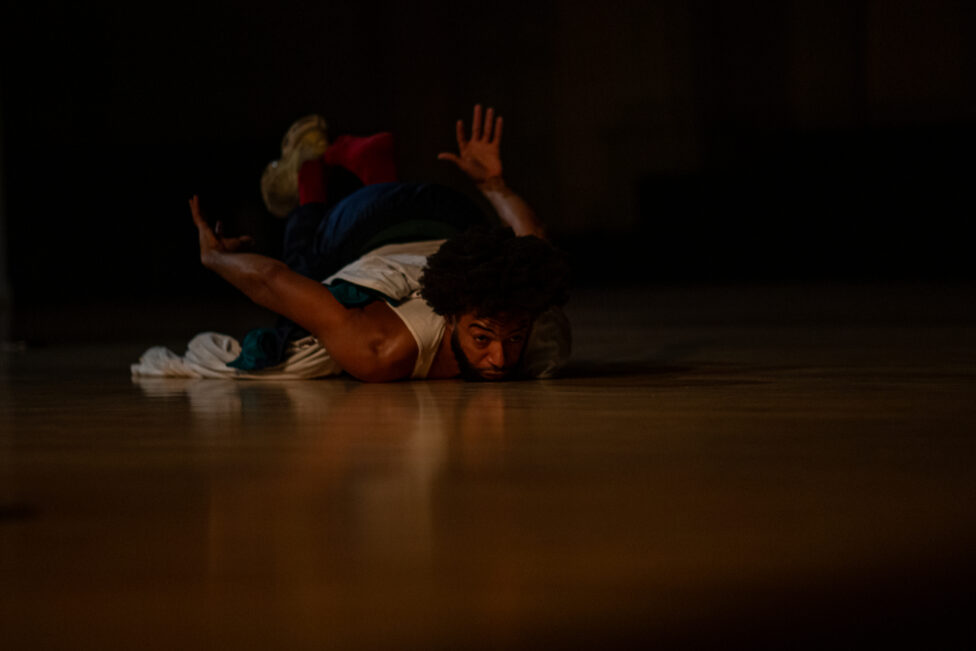
Yeah, I mean that’s also related to just being a dancer too. Just being like, “Oh, I know how I want this to look, and that’s not how it’s happening.” There are a lot of different kinds of choreographers who are like, “I made the step. I want it to look like this.” But a lot of times, I’ll try something out, and if it doesn’t work on them, I have to just keep tweaking it. “How is this going to hit the way that I’m wanting it to?” Versus like, “How do I not just keep you in something?” So yeah, it’s interesting. But then there are a lot of moments when I do like what I’m doing. That’s a beautiful moment because I’m always like, “Oh, what happened here?” And sometimes it’s not just the moves themselves, but there’s an energy around it. In a lot of pieces I’m involved in, and also ones that I make, I’m trying to relearn improvisations. But there’s so many reasons for why you just might do something in the moment, and replicating it is always like a chase. I really enjoy it because it’s like, “No, how did I get there?” I wasn’t thinking about getting there. I was using the relationship of the room, or I heard a sound that made me turn quick, or I was pondering. I didn’t know what to do in this moment, and I stayed too long, and then I really pushed from the ground. So yeah, sometimes it’s like, “Oh, I don’t like this,” and then sometimes it’s like, “Oh, how did you do that?”
CY
That’s so so cool. I guess I relate to the first scenario more. For example, when I see other people’s work when there’s imperfection like a smudge or rework or something that’s not cleaned up, I always find it so charming, so human.The trace of gesture and time. But when it happens on my own paper, I get so frustrated. I want to tear the paper apart. I think it has to do with the training. Of course, it has shaped my cognition and even my moral- it’s an ethic to be right and to be precise and to do it just once.
WG
Yeah.
CY
There’s a sense of right and wrong when it comes to myself. But when I look at other people’s work, I’m much more liberated and “modern”. I can appreciate all the mistakes in others’ work, but it’s really hard with myself. But about improvisation, I think that’s something I don’t really do in my art, and I deeply admire it. Maybe teaching is an opportunity for improvisation for me. I feel like if I’m over prepared, then the class becomes rather dead because I’m just reciting what I have thought of last night. But if you’re thinking live and thinking with people, you must open your mind at that moment, and absorb the information then and there. You become hyper aware because you’re kind of nervous. That does something to your body. You are a little smarter than usual, and you react a little differently than usual. And I think that’s a really precious moment. There’s something almost a little mystical in moments like that.
WG
Absolutely, it feels like there are these invisible ladders or something.
CY
Yeah.
WG
To latch on. You’re- you’re floating. You’re like, “How- I’m gonna fall!” And you’re like, “Oh, wait.” and grab onto something. It’s kind of like coming back to a certain kind of awareness that the answers are already there. Or like, my preparation is not the end of this. There are these signals where you’re just trying to understand people. You’re like, “Where are they? Where are they? Oh, okay, yes.”
CY
Yeah. I suppose there’s a sense of losing gravity when you don’t know where your next sentence will end. You’re blown in the air for a second, and then you have to trust there’s something you can land on, or it’s okay to fall there.
CY
Maybe our craft forms an essential metaphor. For you, everything is dance. For me, everything is translation. Because translation and dance and eating and talking are not that different. But dance is your central metaphor through which you understand other things. So, I think about the synonyms between different systems of thinking, the correspondence and perhaps the distance between these two metaphor systems. Because at the end of the day, what we do is not that different.
WG
No.
CY
We all eat and we all walk.
WG
You said something in one of the articles After “After Babel.” Usually, English is not a language to teach a baby, it’s a language of business. I feel in relation to that, which is, how are we trying to define other ways of listening, listening to the noise. It is through language for you, and movement for me, in that way. English is a business language, so I’m trying to find something that’s outside of that, that I don’t have words for, or didn’t grow up in a place where we had another language for it. African American Vernacular English, I would say, but dance feels like this thing of the outside space, of how I have to speak, or how I’m governed through a certain kind of language.
CY
Perhaps ballet to you is what English is to me: one dominant way of expression in the field.
WG
Exactly. Yeah, ballet is so strict, in a way. It’s like, “This is how you have to do things.” Which is why- there was/is a lot of talk around ” deconstructing ballet”. I would struggle with that thinking, “Well, it is in me.” And you have it in the same way with English. It’s something I have, and I can learn something else, but I don’t know if I can pretend to not know or not have the experience of knowing it. So, how am I working with those tools to speak to something else? This is something I see in a lot of poetry. I have to use the tools of the thing I was given, but I’m actually speaking to something outside of it.
CY
Yeah, I also try to repurpose my training… Instead of a soldier, I’m drawing rocks, right?
WG
Yeah, someone else can do the soldier. I get it. And then, you say… You’re at the family table, you have to explain what you do, and people are like, “What?” “Yes, I’m doing walking patterns or something.” It speaks to something.