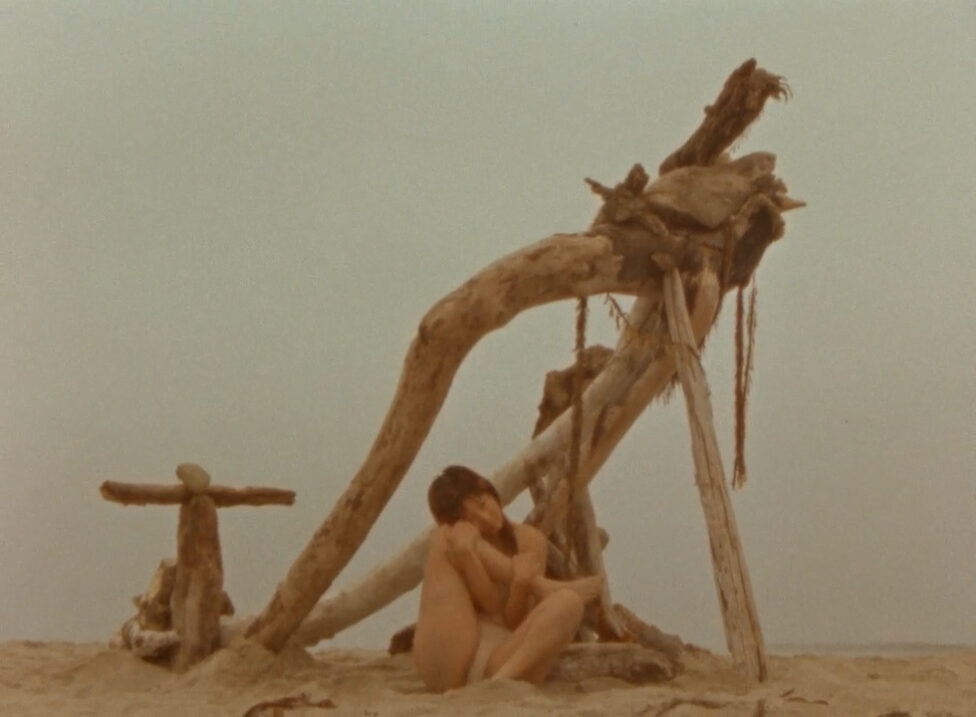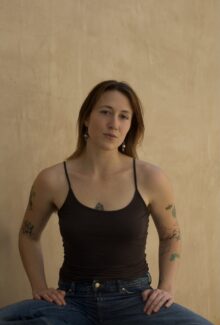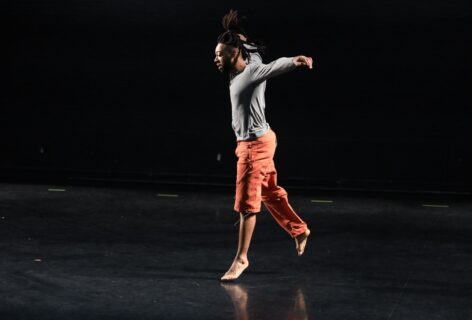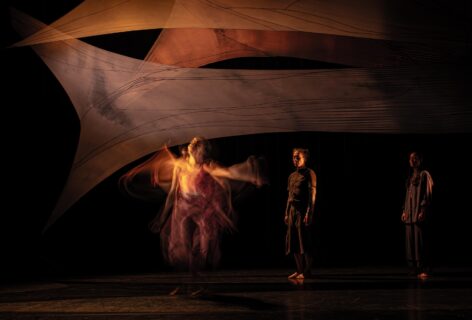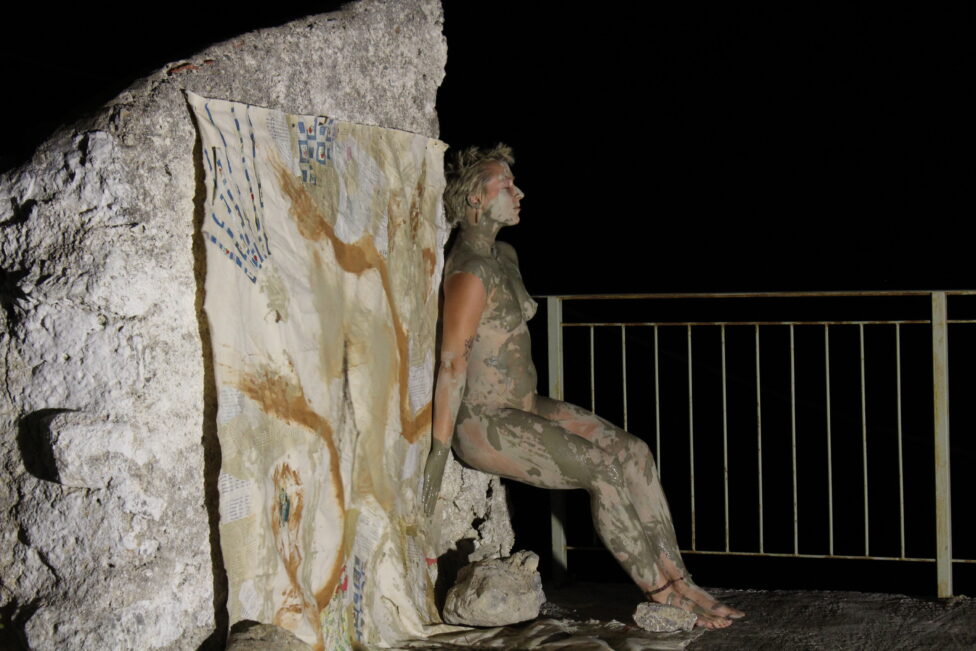
Lena Martin and Jas Lin are respectively very exciting movement artists based in Los Angeles. From afar, I have been admiring their incredible rigor and commitment to their physically vigorous practices. Even though they both have crossed paths with each other a few times in the community, they agreed to use this opportunity at CC to engage in a recorded conversation together to get to know each other. What we have here is a beautifully earnest exchange of ideas around what it is to move through the world as emerging dance artists through juggling career ambitions, passion/need to dance, and soul nourishment in their lives. What are the life values we need to honor and prioritize while sustaining our lives as artists and humans in this contemporary society?
-Takahiro Yamamoto, CC Editor
This article has been edited for the purpose of publication.
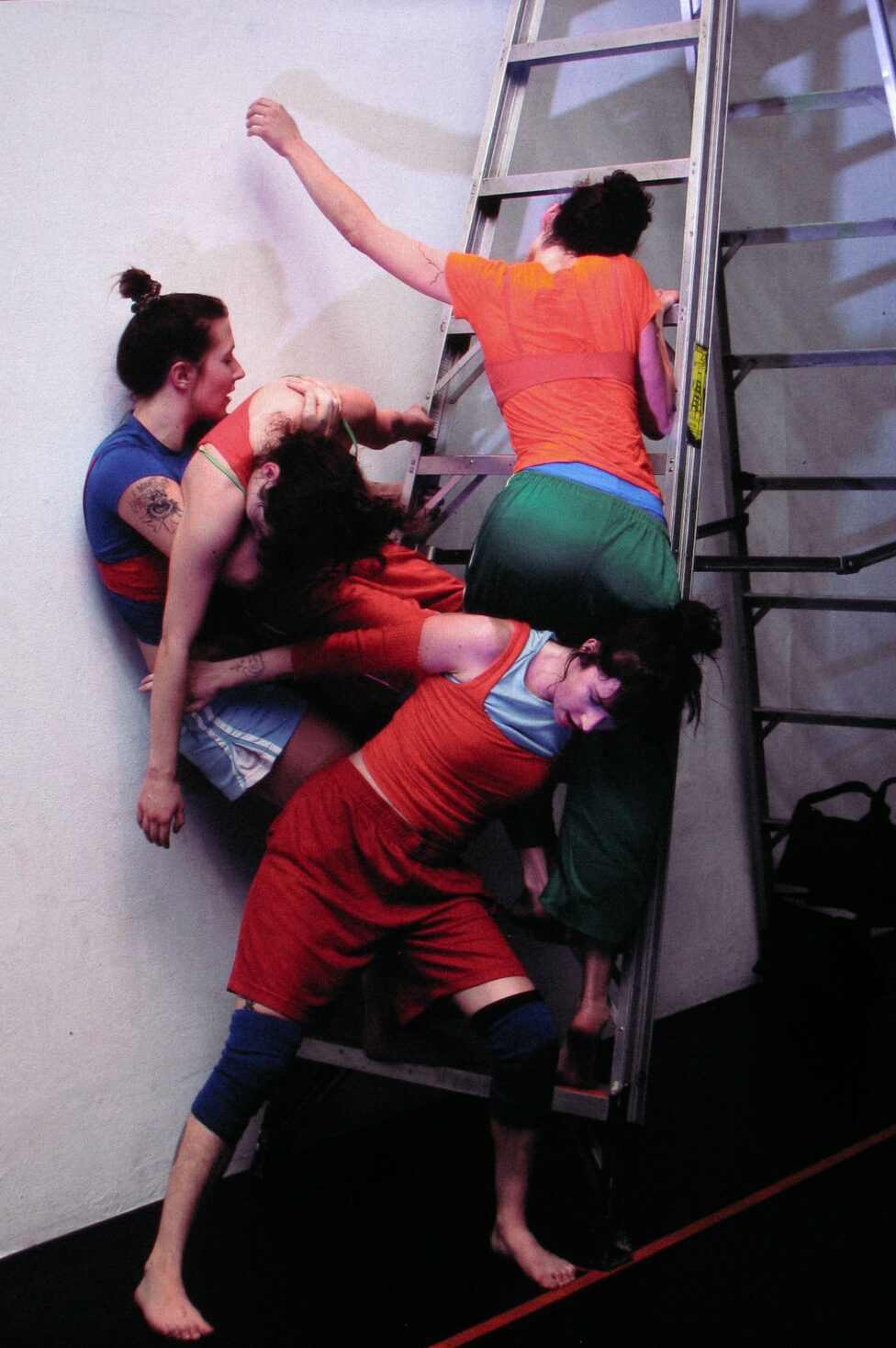
Lena Martin
The dance studio is where everything happens. It’s like love and loss and grief and beauty and becoming. With Mandolin, my wife, We talk a lot about the studio and the sacredness of that. We met in the studio and that’s a big part of our relationship.
Jas Lin
The studio can also invite you to take off your shoes when you enter the Marley floor. It reminds me of Asian household and temple customs. You are transitioning from whatever you’re taking from your mundane life– you’re taking off all that shit you’re carrying (physically and metaphorically) and leaving it at the door to not track it inside. Then you move around your own home or the dance studio space with a different set of awarenesses.
LM
Yeah. Wow. Very cool. Sacred. Leaving-it-at-the-door sentiment is something that has always struck me too. That’s something my dance teacher growing up would say.
JL
Really? I think I wasn’t that tapped into that, the sacredness of the dance studio as a child.
LM
Before we would walk into the studio, my dance teacher would stand at the door of the studio and we would have to do… sometimes it was a high five or a kind of a little shimmy or something. It was a ritual of sorts, I guess, to symbolize that I’m leaving my shit at the door. That kind of vibe. I’m shaking this off, and I’m walking in, having left something behind. I was a really sensitive kid, and I’m still a sensitive person, so that was always really tough for me.
JL
And I don’t think it’s even about leaving it at the door. I think it’s about carrying in and moving with as well. Lately, I’ve been taking one dance class a week, Jasmine Albuquerque’s class on Saturdays at The Pickle Factory. The past few months, I’ve been running really anxious because of big life transitions that are moving faster than I can keep up with. It’s so basic and generic, but I’ve really been able to feel how healing dance is and how much you can move through just by being in a consistent container. The way she structures her class is 45 minutes of warm up and conditioning, and 45 minutes of a little choreo. And within that a lot of seeing each other and being together. During the warmup, there is a lot of cardio where you’re pushing your body to its limit. You are getting out of the mind and into the space of moving things through your body– taking deep exhales in a way that isn’t about compartmentalizing what comes into the dance studio and what doesn’t, but instead encourages you to be with what’s present, while intentionally interrupting and releasing what you want to let go of.
LM
Wow, that’s amazing. What do you feel is bringing you to the studio right now?
JL
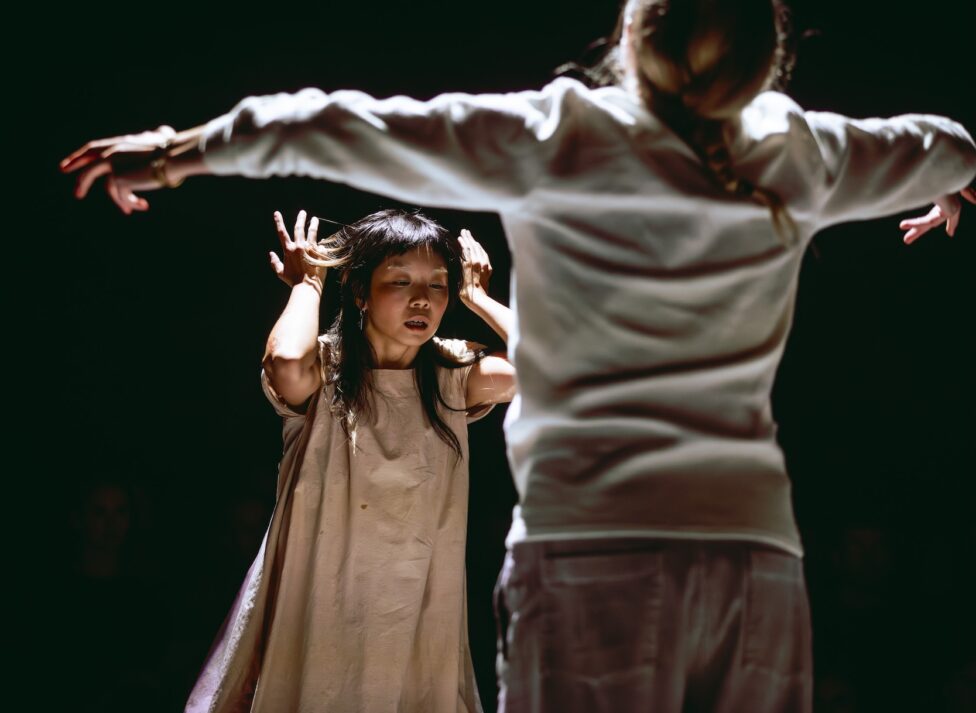
I think it’s that desperate need to be in the body. There’s no room in my place right now to have that practice, really– it’s just piles of stuff and boxes as I’m preparing for my cross country move. And I do run anxious, so it’s easy for me to live in urgency, especially around big life transition stuff. My mind is constantly telling me there isn’t enough time, I have to do this now– whatever the “this” is at any particular moment. What I know is that when I’m present with my body for just an hour and a half, time actually expands, rather than it being like, “Oh my god I missed out on an hour and a half of productivity time.” I think then I can actually move with more groundedness.
LM
Something I’m saying a lot right now is that I feel like there are two wolves inside of me that are asking for very different things. One is really career driven and really ambitious with artistic life and wanting to strive for all of these goals. It’s what we were put on Earth for. And then the other wolf is like, I don’t want to do any of that. I just want to do what makes my soul on fire, which is normally being in the woods and not really giving a shit about stature or accolades or anything like that. I think right now I’m really curious about what the center point between those things are. I am a pretty driven person, and that’s something I admire about myself. But at the end of the day, the things that are most important to me are not just having great successes. It’s about living a beautiful life. So I’m really curious where that lives in my artistic world, and trying to reframe my idea about my artistic world and my artistic life.
JL
Yeah.
LM
It’s complicated being a performer though, you know.
JL
It’s so complicated.
LM
Like my best friend just moved to the woods, in Mendocino. She’s a ceramist.
JL
Oh, I love Mendocino.
LM
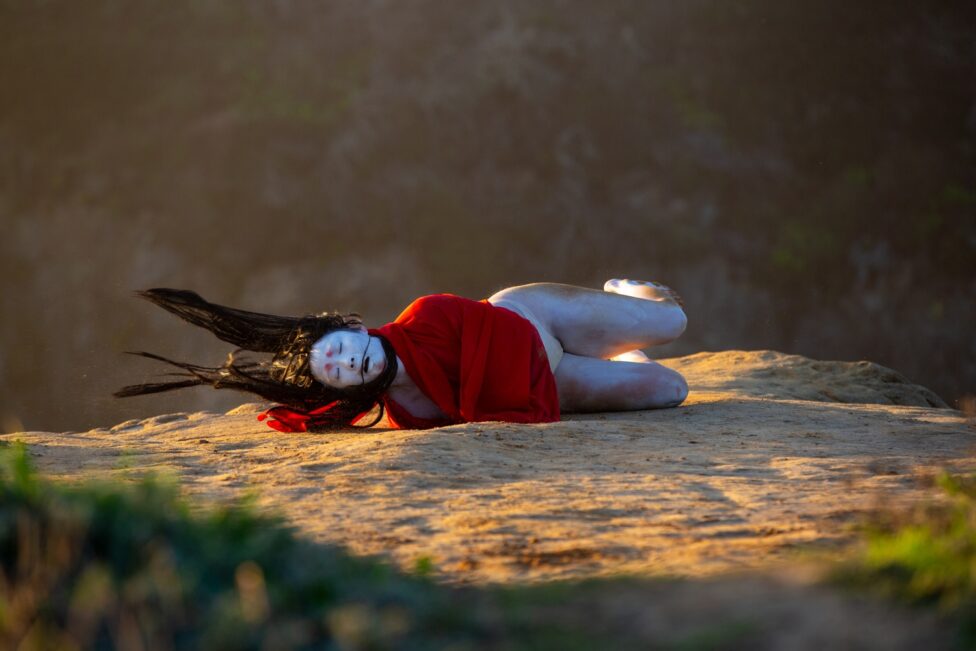
Yeah, I just visited her, and she’s literally living in the middle of the woods with just a little clay studio, and she’s just doing her little thing, and I’m so envious. As a performer and dancer, I feel so restricted to being in the city and being a part of the hustle because we have to have an audience and we have to have people too in order for dance to be somewhere. There has to be a demand for it, you know. I feel really restricted by that right now, but I also try to challenge that notion.
JL
I was just thinking about how demand is also an interesting thing because it exists in different ways. I think the city obviously offers a sort of institutional context and appetite for experimental work in the ways that we maybe understand in Western society.
I was in Pingtung, Taiwan a couple years ago, and there was a Butoh/ritual movement workshop that culminated in a festival there called 柚園自然生活節 (translated as Pomelo Garden Natural Living Festival). The festival was hosted by a local farm, and everything was hyper-local– from the food vendors, craftsmen, bodyworkers to the intergenerational attendees. The event culminated in a group ritual performance that might be considered “experimental performance” here. But in that context, it felt more like community ritual and ceremony. There was a big bonfire in the middle of the field, and the performance embodied transformation and inheritance through fire. The audience was packed, and it wasn’t the type of audience that we would necessarily expect in the West at an experimental festival. When I attend experimental or ritual performances in the West, I often encounter an expected type of audience member, sprinkled with the occasional person who wandered in with a “What the fuck is this?” type expression. But there were literally so many kids and families engaging, and at the end, everybody got to light a candle, dance around the fire, and light up fireworks. It was so beautiful. Witnessing this small town’s relationship to performance and ceremony got me thinking about art’s role in society. Perhaps because of Western capitalism, even experimental art can become compartmentalized into spaces of spectacle that require particular forms of cultural and economic capital to access, rather than something embedded within everyday communal life.
LM
Yeah, absolutely. I think that brings up so many questions of access too. Performance and art don’t need to just exist for people who can afford it per se.
JL
Right.
LM
A really early dance teacher said to me one time, talking about dance as a career, etc. And she was like, “It’s so normal to dance, you know, as normal as the birds singing.” That’s a sentiment I have carried with me a lot throughout my life. That this is so normal and accessible in a way too. Yeah, that’s beautiful.
LM
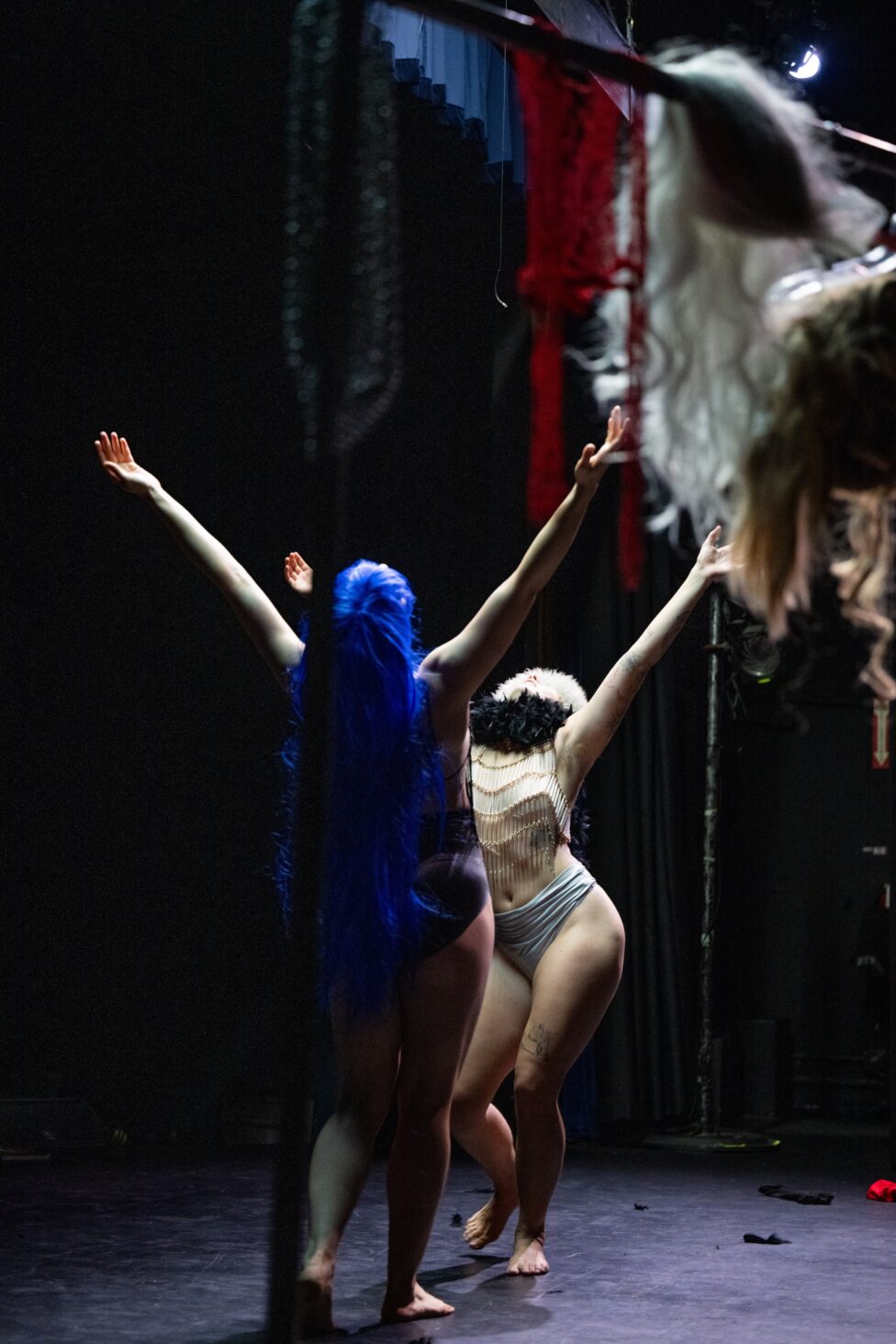
Usually, one of the bigger takeaways for me when I leave an artistic process is the way that I got to connect with the people I was in it with. I think that’s pretty high on my value system these days. The connection and the relationship between performers and the relationship between audience and audience members. The space that we’re all in together. That is like the juice.
JL
Yeah, I’m hearing your two wolves analogy about the juice that fires you up versus career stuff, and I’m wondering where that Venn diagram intersection is. When thinking about a career, we often frame things in milestones, right? But I wonder what happens when we measure artistic success with not only career achievements, but also what makes you feel alive and on purpose (an orientation I’ve gotten from adrienne maree brown).
LM
Because at the end of the day, that’s what matters. It’s not the award or the accolade. When we’re all on our deathbed, that’s not going to be what we’re thinking about. It’s the feeling. It’ll be the way that we felt, and that’s the thing I’m always chasing right now. But then there’s capitalism that’s like “Succeed, please.” That’s an internal battle. If we were to put that into action, taking something that rang true in the value system, to represent the milestone, what’s an experience maybe that you’ve had recently that has done that for you?
Jas Lin’s Schindler House Haunting, commissioned by homeLA for the MAK Center for Art and Architecture’s centennial celebration of the Schindler House. Filmed by rybg.
JL
I’m having difficulty locating that right now amidst this Fire Horse year. But a few years ago, I had the same sort of internal dilemma. Because I’ve worked more in the commercial dance world over the past decade, I feel like the dichotomy is even stronger. I’ve experienced the novelty of career milestones like, “Oh, my first awards show, my first tour,” and all these things. But at a certain point when the milestones stack up, the novelty wears off. Then I realized that the value within those milestones for me was mostly just in the novelty, rather than how my true values were mirrored. So I started this graph that I was doing with all of my projects. I forgot the exact terms I used, but essentially the x-axis went from soul-sucking to soul-on-fire. The y-axis, rather than career recognition, pointed to literal financial sustainability. Because for me, that’s part of the dichotomy. Not necessarily about the career accolades, but just sustaining a career that sustains your life.
LM
That in and of itself, is like a “check” in the box, you know.
JL
Yeah, and it’s not always aligned. I would plot all my projects on this graph according to their x and y values. Then I used green and red pens to reflect on my own compass. A green point would indicate, “This balance feels good to me. Maybe it was a little bit soul sucking, but it was super high paying. Or maybe it was only a little bit soul sucking because it was only two days, but I made some extra cash.” Then I can conclude, okay, that actually feels good because I feel like that was worth it. Projects that are both financially sustaining and life-giving would live in the upper right quadrant. That’s obviously the kind of stuff to orient towards. Oftentimes the work we want to make is not the work that keeps us fed either, and that’s okay. Doing that exercise really helped me because I was struggling with saying yes or no to certain things. Mapping out all of my projects in that way helped me understand the balance and relationship between everything working together. As freelance artists, we’re usually working on a million things at once, and that all comprises our life, you know.
LM
I love this process. Is this specifically after a project is done?
JL
Well, this is something I did when I was at a point of, “Oh my god, I don’t know what I’m doing, what I should be saying yes or no to,” because I had a scarcity mindset.
LM
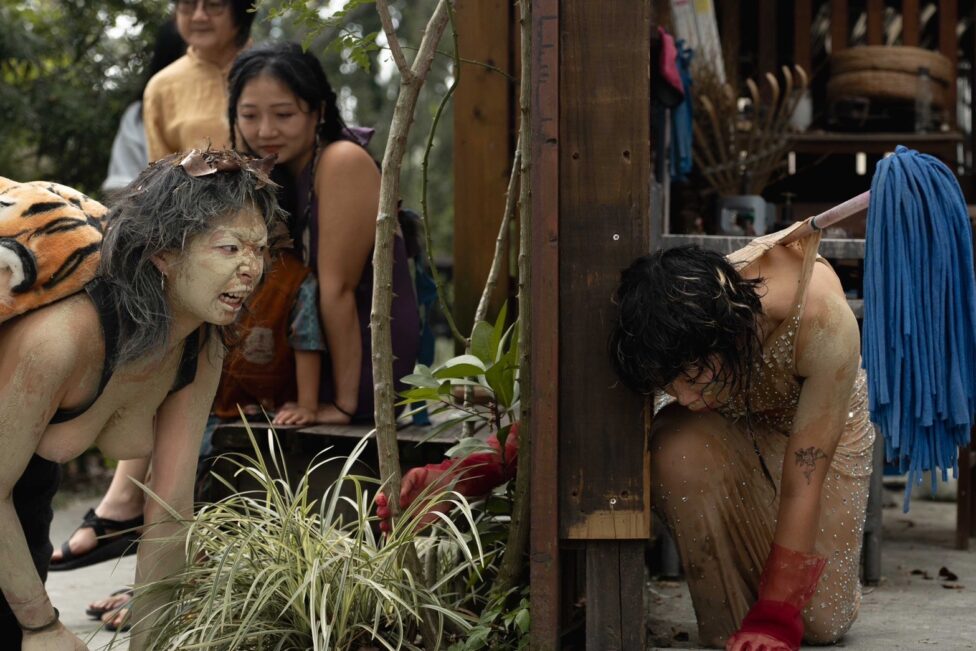
This is reminding me of something that I do before taking on a project. It’s the freelancer triangle: “is the work good”, “are the people good”, “is the pay good.” And I will only take on a project if it meets at least two out of the three.
JL
Two out of the three, right.
LM
If it’s only one out of the three, probably not. But maybe if it doesn’t pay very well, but all your friends are there, and the work is cool…
JL
Then definitely yeah, for sure.
LM
So that’s kind of what I run through when I’m thinking about accepting work. I did a project last month, which was maybe the first time I’ve ever booked something that had all three things. I was like, oh, okay, yes.
JL
It feels so good.
LM
But I really enjoyed this process you’re describing, because it feels very true to processing the process, experimenting, digesting, and sitting with the takeaways. The postpartum of something is not something I engage with as much as I would like to. Somebody said to me recently that life is not meant to be lived and processed at the same time. I’m always feeling this fleeting feeling of “Oh things are just moving by so fast and I have this project and suddenly it’s over.” Your reflective process feels like a way to actually process what you went through and the takeaways from it.
WIP LA Duet, choreographers Lena Martin and Mandolin Burns. Video by Noah Kentis courtesy of WIP LA.
JL
Yeah, yeah. I think this process actually feels more logical. I also adopted another more emotional process from an artist whose name I can’t remember. But HomeLA had an exhibition where they had some artist notes on display, and there was an artist that took notes on intentions before the process, what happened during the process, and what was learned after. It’s nice to do for every project– sometimes I’m like “I don’t know why I’m doing this,” but there’s always something. Even if what you learn is “no more of this.” Otherwise, we keep forgetting. And I think we forget a lot, and then we just keep saying yes. But if you write it down, you can refer to it. This has been really nice, sort of creative doula work-
LM
Creative doula work, I like that. I’m totally gonna take that. I feel like this month is the first time I’ve stopped and caught my breath since the start of the year. I’m doing a lot of processing right now. From the start of the year, it’s been like project to project to project to project to getting married to project. So, this sentiment of stopping, “how did that actually feel,” is really resonating with me.
JL
It’s so important. Sometimes we don’t get to pause.
LM
Yeah, it is important, and that’s another product of capitalism. It’s like “don’t stop,” you know.
JL
Yeah. I enjoyed finding this little corner through our conversation. I feel like there’s a vast web of possibilities where we could have landed. It was nice to inhabit this little corner.
LM
Yeah, I agree. It felt really true and sacred. Thank you.