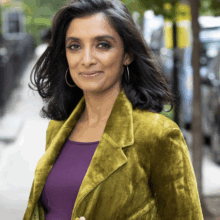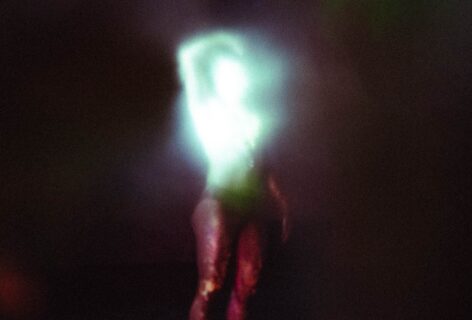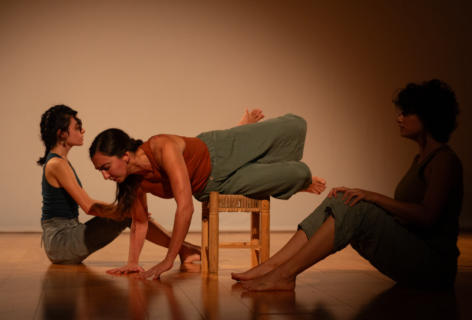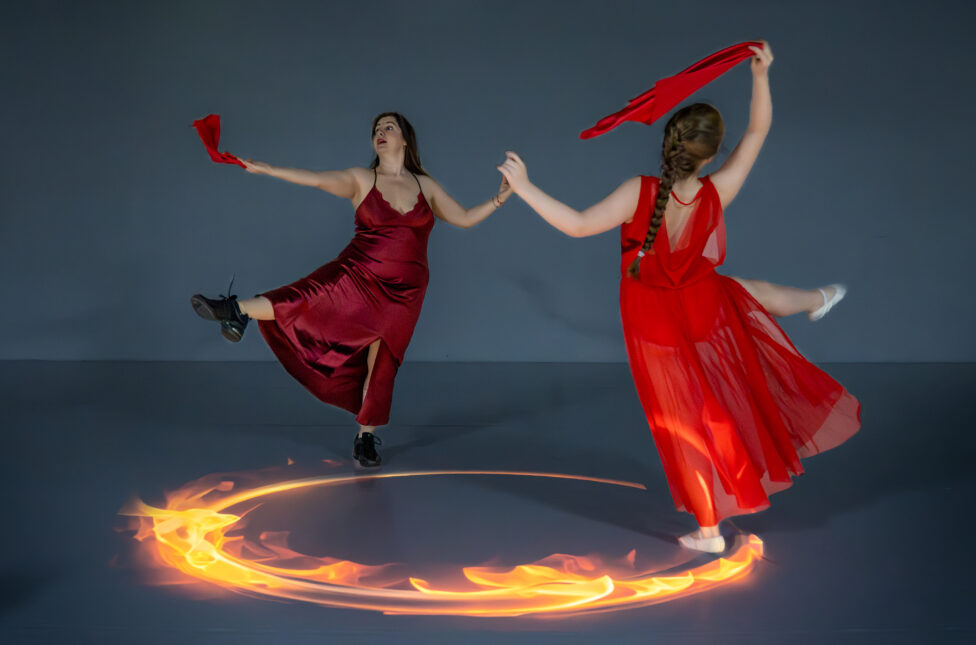
In this intimate and honest conversation, choreographers and mothers Anabella Lenzu and Preeti Vasudevan open up about the complex intersection of motherhood, identity, and artistic practice. Speaking as immigrant women artists living in New York City, they explore the profound transformations—physical, emotional, and creative—that come with becoming a mother while maintaining a life devoted to art.
Their dialogue moves fluidly between humor and vulnerability: from the disorienting loss of identity after childbirth to the surprising wisdom found in slowing down; from the guilt of saying no to opportunities, to the revolutionary act of creating dance while raising children. Both women wrestle with questions that have no easy answers: What does it mean to be a “good mother”? What does it mean to be a “good artist”? Can the two coexist without conflict?
Part of Lenzu’s ongoing choreographic research project, Listen to Your Mother, this exchange is a call to acknowledge, celebrate, and support women-identifying artists who are also mothers—especially those navigating the added layers of migration, cultural duality, and artistic survival. As they share their personal stories, Lenzu and Vasudevan illuminate a universal truth: motherhood and artistry are not opposing forces, but evolving practices of care, courage, and creation.
-Anabella Lenzu, contributor
This article has been edited for the purpose of publication.
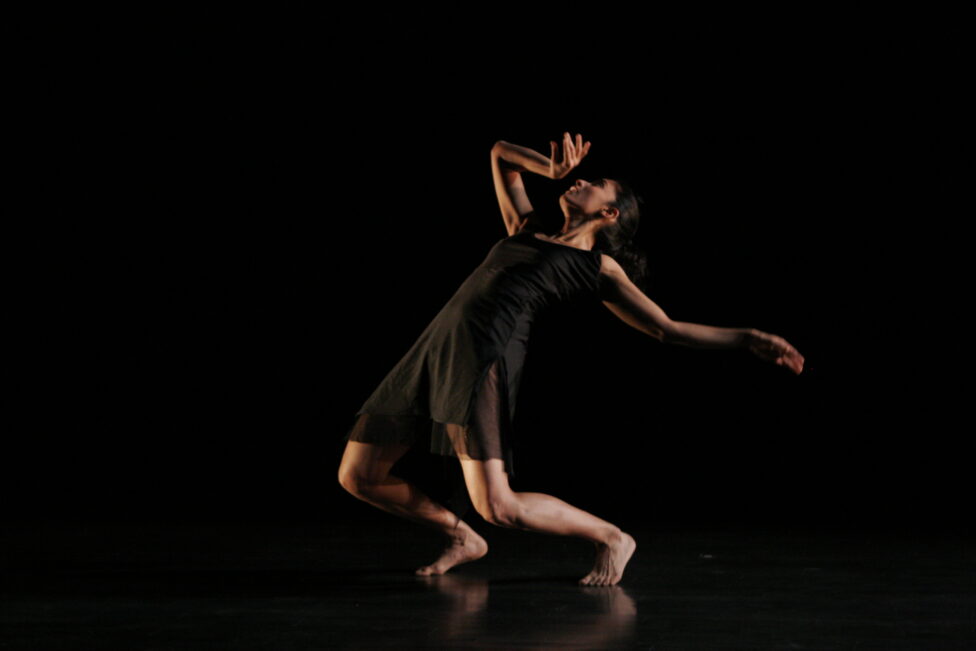
Preeti Vasudevan
When you’re pregnant, it’s perfect because you control the baby. Your baby is inside you. I had the best year when I was pregnant. Once a child is born, everything changes, right? I think the first thing that happened to me was loss of identity. I did not know who I was. I mean, intellectually I did, but viscerally my body had changed. It wasn’t listening to me. My bones had shifted. It would never come back to what it was. I was just this milk producing cow. I suddenly had an affinity for dairy cows. Suddenly I did. I’m usually a person who sets an agenda, like 10 things planned. And I’ll finish all of them in one day. But at that time, I was struggling to even finish one thing. And adjusting to that, sort of setting myself up like, “What is success?” It was a very different way of operating. My brother gave me one piece of advice I’ll never forget. He said, “Sis, I know you do everything. You’re the Superwoman, but just listen to me. Just give yourself one goal a day.” That’s it. I listened to him, and he was right. The sense of achievement that I just did one thing was unheard of in my life. So that was a dramatic change, emotional change and shift.
Anabella Lenzu
It’s interesting that you bring up the identity. I think for me, it was not about that actually. If I was not having a kid, I would be a crazy lady with a lot of cats, obsessed with dance and bitter like vinegar. But my kids ground me. They made me connected with the rest of the world; otherwise I would live in my own bubble. My teenage kids share the music we hear now, its lexicon, and the things that are happening in the world. Sometimes as an artist, it could be isolating, especially in New York City.
PV
You and I were not born and brought up here in the U.S.. So we bring values, customs and traditions from another country. Neither is good or bad. It just is the way it is. And then we adapt to the situation here, and we try to make sense of both. So when you have a child, suddenly you think about how she needs to know her heritage. But then I don’t want to be like other parents, making her do only Indian things. There’s a lot of internal battle.
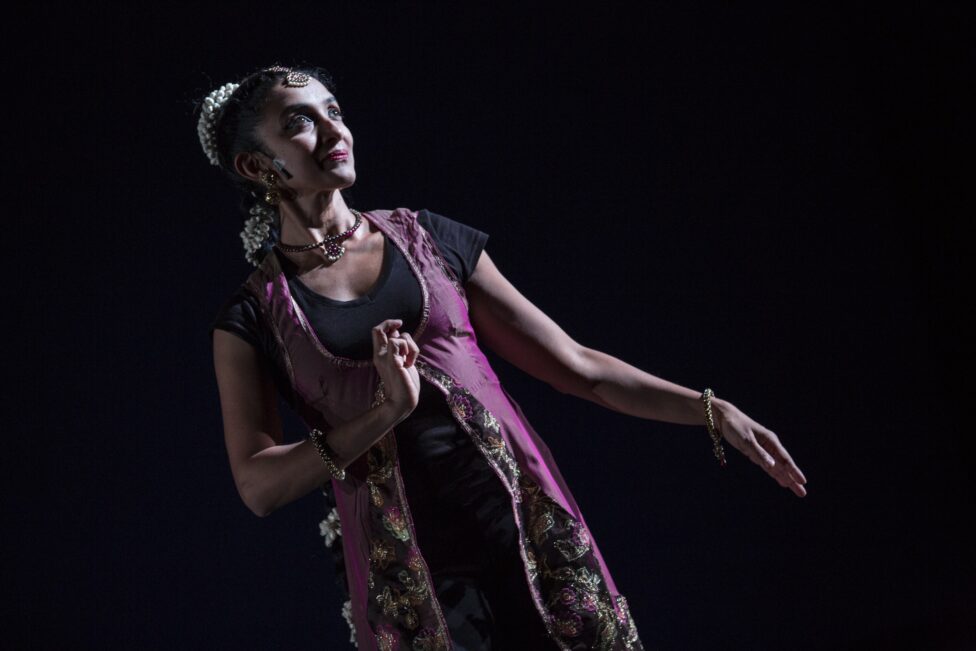
AL
Having kids was a very smooth transition for me actually. My body, yes, changed. But it was not until, perhaps five years ago that I started to have a crisis about who I am from the outside. It was very interesting that from the inside, yes, it was psychological, emotional changes, that it was actually the outside: how I was perceived from the outside, as the mother. Like you say, all the bone structure changes, you know, even the size of your shoes change.
PV
I live and breathe my dance. So, I would say that becoming a mother probably has grounded me. It’s really made me think very deeply about who I am and sacrifices I’ve made since becoming a mother, the depression that came from it, to learn from that, to actually look to see. Actually, it’s a strength. And actually it’s teaching me. It’s making me do things I would not have done.
AL
I’ve been doing this question for my research, Listen to your Mother*. There are two parts: How do you define what it is to be in between. What does it mean to be a “good mother”? What does it mean to be a “good artist”? And how these ideas sometimes get opposite to each other, or they go in a parallel line. So how do you, Preeti, define what is to be a good mother and what is to be a good artist?
PV
Such a difficult question, because the term “good” is so contentious, you know. What does good mean? I think one of the first things that mothers learn is how bad they are, because, you know you are trying to find who you are, too. There’s too much expectation from society on mothers that you have to juggle so many things at the same time. And then when you’re an artist, one of the things that calls an artist is to be independent, to really not try to fit into a box, to provoke thought, to challenge the status quo. And when you become a mother, that’s exactly what you’re doing. You’re doing all the opposite of things you do as an artist, right? I’m getting Pampers. I’m getting the milk. I gotta feed at the right time, I gotta read up on all these books and these online things. How can I be a good mother? I’m failing as a mother! The amount of guilt that comes onto you. I still don’t know if I’m doing good parenting because, you know children, they are their own people. And you try out a formula. It works maybe for six months, and then they change and that’s out the window. And something new comes in. And you go, Wow, I so prefer improv inside the studio because it’s so much easier.
I think being a good artist is letting go of control. I think being a good mother is learning how to balance being in and out of control. And I think for me, I just don’t know whether this concept of “good mother” puts too much weight on the patriarchy. I don’t even know what a mother is, you know? It’s such a personal experience that the good or bad or those judgments push us into an anxiety where we don’t need a living. And it also pushes the children into anxiety because then they’re told, “Is your parent good, or bad?”, or if you’re a good child or bad child. Immediately you start putting yourself in these boxes.
And as an artist, all my life, I have fought against it. So it is a big battle between the two, but the battle sometimes in the studio brings some really good deep art because there’s a channel, right? We can push it through that and express that frustration, or whatever you’re going through. And it comes as an artistic expression. So I think that drives towards you being a good artist because it pushes for you to be honest. You can’t really BS about this life as a mother. You can’t hide anywhere but being a good mother. Sometimes just letting go and just know. I think it’s embracing that you can’t be perfect. Can you become a better parent? It’s a little bit like those announcements in airplanes. When the oxygen supplies were there, yes, you put yours first, yes, and then your child. And I think every parent, mother or father has to do that first. What about you?
AL
I totally agree with what you say. When you talked about guilt, that was a big monster for me. The guilt of saying “No” to opportunities because I want to be the one that drives them to school, and picks them up. I don’t want my kids to grow up with a babysitter. I really wanted them to be with me. That’s why I choose to be a mother. But at the same time, in this society especially in New York City. I feel that I get so many demands to be a good artist. One of the things is that you’re not always available, because you have your kids and responsibilities. And so when someone says, “Oh, can you come to this meeting? Can you?”, my answer sometimes is “No, I’m sorry. I need to pick up my kid.” Oh, it’s so mean that she is not so into her art making, but they don’t understand that it’s a choice that you make. I was interviewing choreographer Justin Lynch for my project, and she said that it is a revolutionary act to be in the dance studio and create dances when you a mother. I really feel that!. Society asked me to have good citizens, good kids, but also asked me to make money, to be successful. How can I achieve all those things at the same time? So, yeah, like you say, this brings a lot of anxiety, and then it’s when you start to need to set boundaries.
In the U.S., I feel pushed into producing; otherwise you don’t exist as an artist. Until 2016 I had a dance company, and then I started to do solo projects because I couldn’t maintain “the structure”, economically, emotionally and psychologically.
What are the communities for us that nurture mothers like us? The only grant available for parents /Artist was supported by The Sustainable Arts Foundation (SAF). It provided financial awards and supported family-friendly residencies for parent artists and writers. But their grant program ended in 2023.
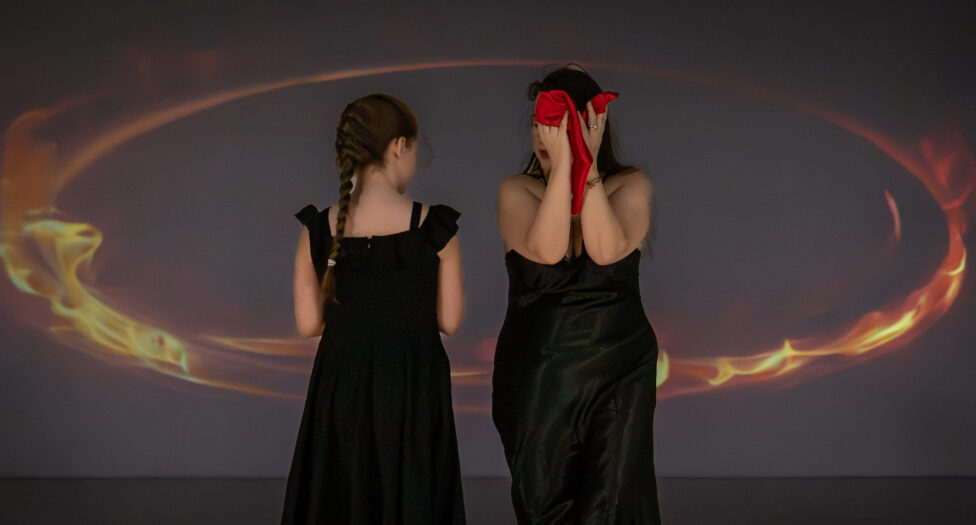
PV
A community is what comes to understand you. So there are some organizations like Mosaic for example. When they started, you know, it’s all artists coming and making decisions. So for a community, I think as artists like us, we say, well, what about mothers? So we need a system exactly to develop a sustainable system for like, say, artists who are mothers.
AL
In my case, being an immigrant, it is so with a lot of effort that I can build my own support system. For example, my own dancers/company members helped me as a babysitter. At the time I did not find any support group of mothers. Part of the Listen To your Mother project is to spread resources among artists/mothers. An amazing example, in the UK, is DanceMAma, which empowers parents who dance to blend their caring responsibilities with their artform. Another example is Club de las Malas Madres (The bad mothers club) in Spain: a community of women and mothers who fight to break the myth of the perfect mother and achieve true balance.
It’s time for us in the U.S. to create an organization that brings resources and support! When I interviewed Sarah Rudner for the project, she gave me hope! She is a mother, educator, choreographer and ex- Twyla Tharp company member. Listen to Your Mother connects the community of mothers and choreographers to put us in dialogues. This conversation between you and I is to create a group of choreographer dancers who must celebrate motherhood.
PV
I agree! As a mother, we are looking at the footprints we leave. What role-modeling do we do for our children? Yes, and it becomes part of the community building.
*Listen to Your Mother is a choreographic research project, spearheaded by Anabella Lenzu, dedicated to the lives of women-identifying artists who are immigrant mothers living in New York City. The project seeks to capture these underrepresented women’s stories to inspire dialogue, appreciation, and social support instead of the ongoing prejudice endured that is historically placed against mothers and women in the arts. https://www.anabellalenzu.com/listen-to-your-mother