“Whose Body is My Body and Whose Dance is My Dance”
Bratislava, Komařice, and Prague
Report by Thomas F. DeFrantz
The March, 2026 residency facilitated by GPS and Movement Research, Inc, and the Live Performance Bazaar z.s. and supporters offered an urgent moment to consider interlocking legacies of colonial and State controls, formations of dance connectivity, sharings of practices and concerns relevant to experimental dance, and the shared visions of worldmaking that we crave and seek through our dancing. I was thrilled to spend two weeks, from March 4-18, 2026 among artists of Slovakia and the Czech Republic, as I am thrilled now to offer these comments and reflections.
Our hosts throughout this event, maja hriešik, Eva Prieèková, Markéta Málková, Ewan McLaren (and his ever-present colleague Lucia Šimášková) were incredibly kind and always-present to provide support, comfort, care, and an interesting question or observation about our far-too short time together. I arrived before Ogemdi Ude, my fellow GPS artist from the USA, in order to present a lecture at the at VSMU Academy on Thursday March 5, and then I stayed on a week after Ude in Prague to attend performances at the Live Performance Bazaar. My thoughts here are in the context of time spent meeting artists casually in Komařice and Prague, and also in the context of lectures and workshops in Bratislava.
***
The dance scene in these three sites is small and tightly-entangled. Artists from any of the three sites knew artists from the others, and we met some people in all three sites across the two weeks. This speaks to a human infrastructure that grows from its geographic roots among itself, rather than the constant pressure of an outside world that might produce experimental dance in other places. Artists were always quick to tell stories of travels to other parts of Europe or the United States when the opportunity arose. These stories were couched in a lament for the current political situation in the United States that renders the USA a terrible place to live, claim citizenship, or create artwork to speak to explorations we need now. The USA was always the subject of a shared wound, a sadness that a beacon on potential social democracy has dimmed in the MAGA and Trump movements of the last ten years.
Artists we met were always interested in Black performance, its theories and its potentials. This is exactly why Ude and I were invited to create workshops and sharing platforms: to explore the trajectories of Black US performance and its inevitable impact on dance cultures across the planet. While the distance between knowing something about and understanding how Black life unfolds in the United States can be cavernous, artists throughout our trip had more than basic information and thoughts about the legacies of slavery that force Black performance into a corner of representation and political agency, even when artistic innovation might be the desired effect of making creative work.
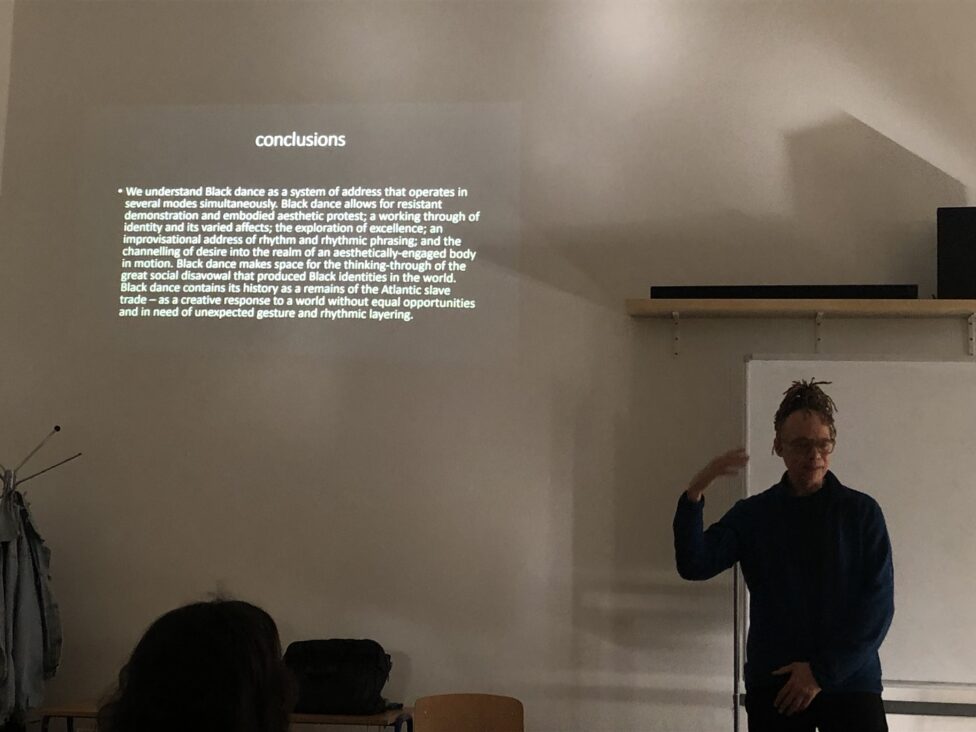
The time in Bratislava included conversations with hriešik comparing notes on how ‘dance history’ and ‘dance theory’ are taught in arts institutions there and in the US; the lecture for students at the VSMU Academy revealed curious and interested younger artists asking fine questions about how dance matters to people and how Black performance in the US has offered several distinct genres of dance innovation across the last fifty years. Similarities in the classroom formations and the expectations of dance students caught my attention: students at VSMA arrived to the lecture with a familiar sense of responsibility to attend the course and follow the ideas of the instructor, even as discussion of dancing and life that are closer to their immediate concerns might have been more appreciated.
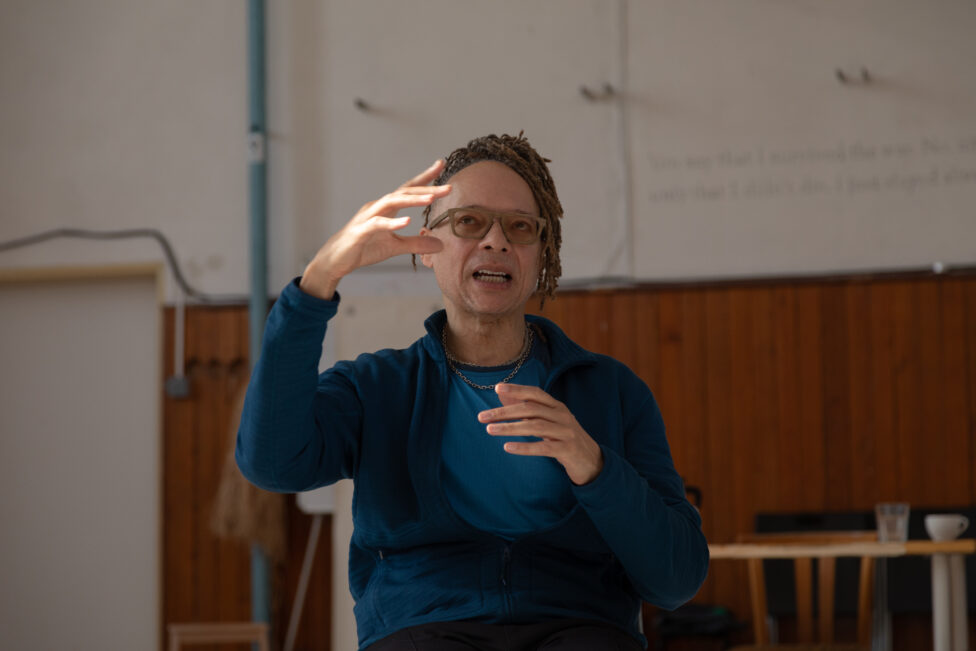
I enjoyed brief discussion of the particularities of Black American life as they sometimes cohere to the marginalization of the Roma people in eastern Europe. In Slovakia, though, conversations made more of how this part of Europe is considered separate and somehow ‘backwards’ to Western Europe generally, and how the artists working in Slovakia are compelled to look West in order to imagine more stable formations of art practice and dance-making.
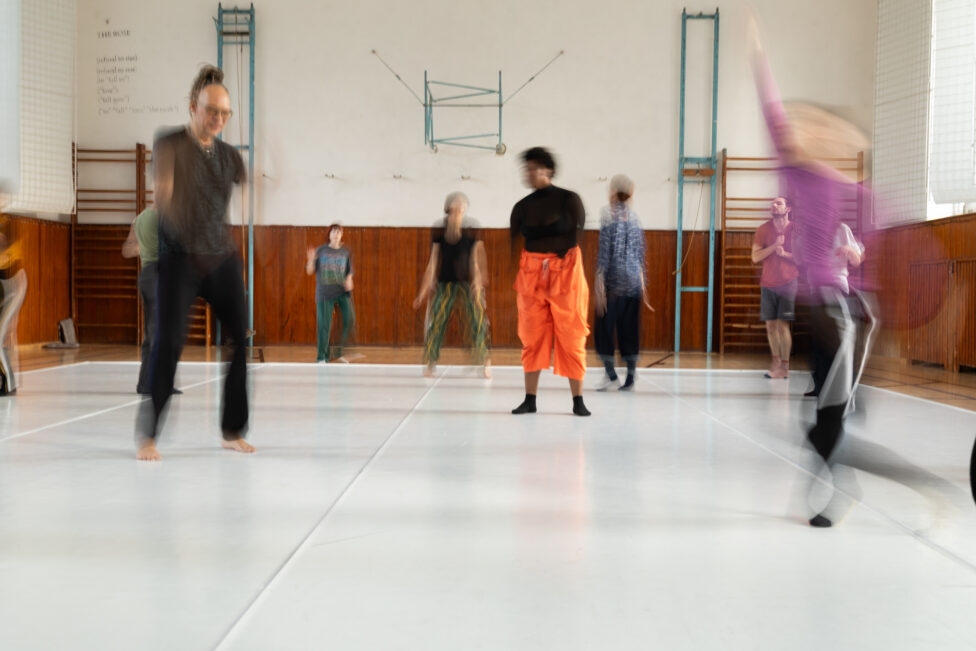
The two-day workshop that Ude and I staged seemed to go well? We asked questions and offered propositions; we shared ideas and movement prompts to see what the group of participants wanted to explore and also how we all wanted to move together. Ude and I had met often, but never worked alongside each other: we began with an unexpected conversation between us that the participants were invited to witness. This format seemed effective to spark a sense of shared disorientation: we two facilitators were meeting each other in the context of the workshop where we all met each other as well.
Participation in the workshop was full-bodied and affirmative. The participants took up each of our propositions with vigor and hearty interest; people immediately launched into movement prompts and questioning whether it was activity to do singly or in small groups. At one point I asked the group to move me around the space with my eyes closed, introducing me to the elements of the space and caring for my large body. The group responded in good kind, working together to protect me even as they had to decide what to do with me. Physical provocations like this were well-explored by a group of artists, many of whom knew each other but with some outliers who arrived just for the workshops. In a funny example, a male-presenting person thanked me at the end of the second day of the workshop, by telling me that he had gone to the wrong workshop, but he was glad to have stayed to the end.
Conversation in the workshop revealed a sense among the participants that life in the arts center where we met was rigidly separate from life in the streets of Bratislava, especially for those of us who present and explore through queer possibility. We discussed the looming threat of violence from fascists spreading normative assessments of what and who “should” be allowed in public. Artists in the workshop wondered that the rising fascisms of the nation and region were squeezing a sense of liveliness from people – especially young people – and forcing a sort of grey zone of survival and social compression.
We traveled to Komaøice to spend time in Málková’s creative retreat center. Here, we enjoyed long walks in the woods and sharing stories of building an experimental arts center in a generations-old homestead and very small village community. Some time in the lovely small studio there, sharing movement ideas, accompanied longer conversations and sharing food and wine among the other artists also in residence alongside us.
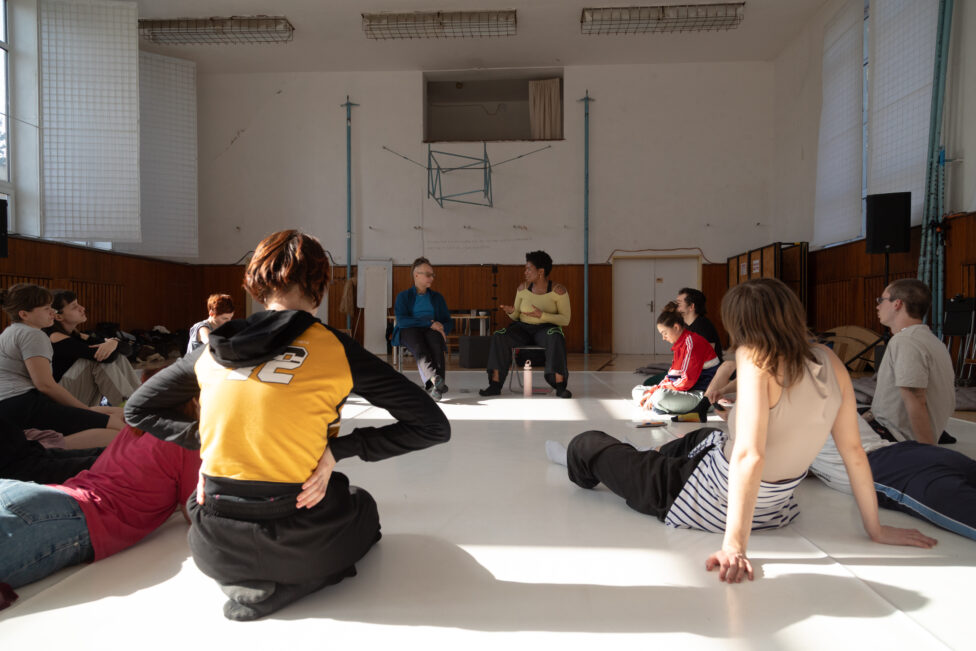
Conversations here tilted towards aspects of sustainable artist life – are there any? – and what to do when lead artists, or employers misbehave and demand much more than might be reasonable of interpretive artists. Again, we focused first on similarities of itinerant artistic life in the Czech Republic and the United States, before exploring differences in community-building processes and just scale of involvement in each system. Similarly, we all work on several projects simultaneously, have several ‘employers’ or gatherings of artistic agendas to navigate all at once, and barely have enough resources to survive the week or the month. None of us rest enough, and burn-out is already present no matter who is leading the conversation or offering a story of making work or performing. Among the many differences between creative life there and in the United States include the vastness of the US geography supposedly linking places through some sort of shared cultural formation, and the sense of ‘anything goes’ that allows artists in the US to make things seemingly without much reference to the ‘dangers’ of a State that doesn’t support us, or the rising fascisms that surround us. In the United States, and especially for Black artists, we are used to being way outside any mainstream, and we expect and receive little support or aid from any government. The scene in Bratislava felt healthy and curious. The younger students at the art school and the more mature, mixed-experience artists of the two-day workshop brought good curious energy to bear on our proposals, and offered many ideas of their own into a sharing of making and doing.
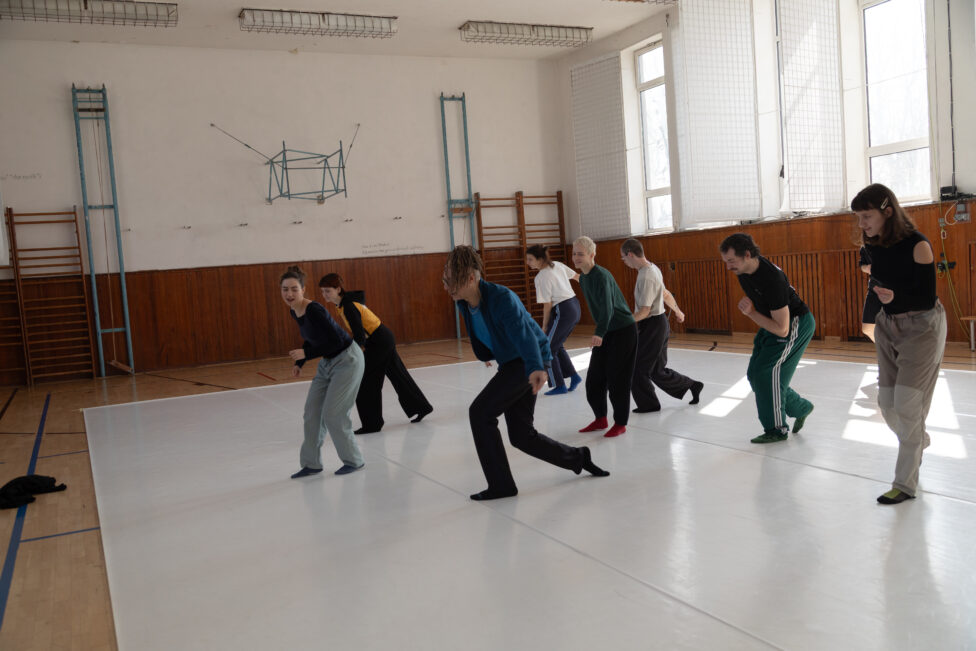
Moving to Komařice, could there be a more lovely rural retreat for dance artists to gather and make/think together? Possibly not. The grounds and the studio, and the availability of a wondrous natural world to enfold dancemaking were entirely welcome and distinctive. Conversations in this portion of our residency were with artists involved in Tomáš Janypka’s formation “my conscience is clear, baby,” a mature, grounded group who already knew each other in various formations outside of this particular project. Together we shared stories and intimacies of making new work quickly and on commission that were not unlike experiences of the United States. As that group of artists were launching a new project during our shared time. it took a moment for our small conversation to unfold. That said, the conversation continued in Prague after our three days together, as all of us had things to do around the Live Performance Bazaar.
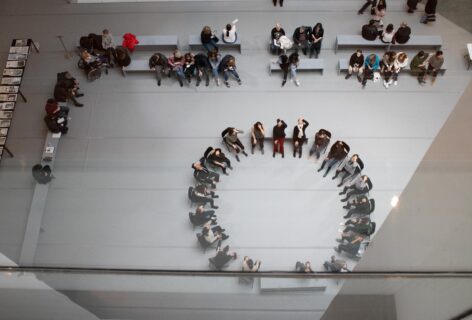
In Prague, the community of dancemakers and curious artmakers expanded to encompass other invited artists to the festival, general audiences, and artists who had taken time to participate in festival events. Here conversations were even more expansive and generative around difficulties of the Central/East European scene, and the reliance on Prague, as a large city center, to hold so many artists seeking ways to share their ideas. A general hopefulness surrounded quick conversations at breakfast, long leisurely lunch conversations, and the roundtables staged by the Festival after my own lecture alongside that of Robo Švarc, an invited curator and visual artist. The sharing circle “Whose Dance is My Dance” on Saturday March 14 revealed a number of recent-arriving artists to Prague who hoped to build some sort of creative dancemaking practice there after struggling in rural or more expensive urban places in other countries. Again, a hopefulness coursed through the conversations, and the gathered seemed to revel in thinking that a global communication could be enhanced by theatrical performance, and that one also relied, in some ways, on routes of theatrical exchange.
This might be the largest ‘take away’ for me from my experience in this opportunity. I enjoyed getting to know Ogemdi Ude through our intensive time together: this was fruitful in many ways of elaborated dreaming together. I met many artists in the workshops and classes, and then also in the lobbies to performances, at breakfast or lunch, or having a drink together after a show or a day of working; these encounters encouraged me to think about what theater offers as a resistant strategy to the normativities that many State ideologies produce. Most artists I encountered wondered “what else could there be?” and how could dance theater enhance a sense of shared possibility and collective actions of resistance to stultifying hegemonies.
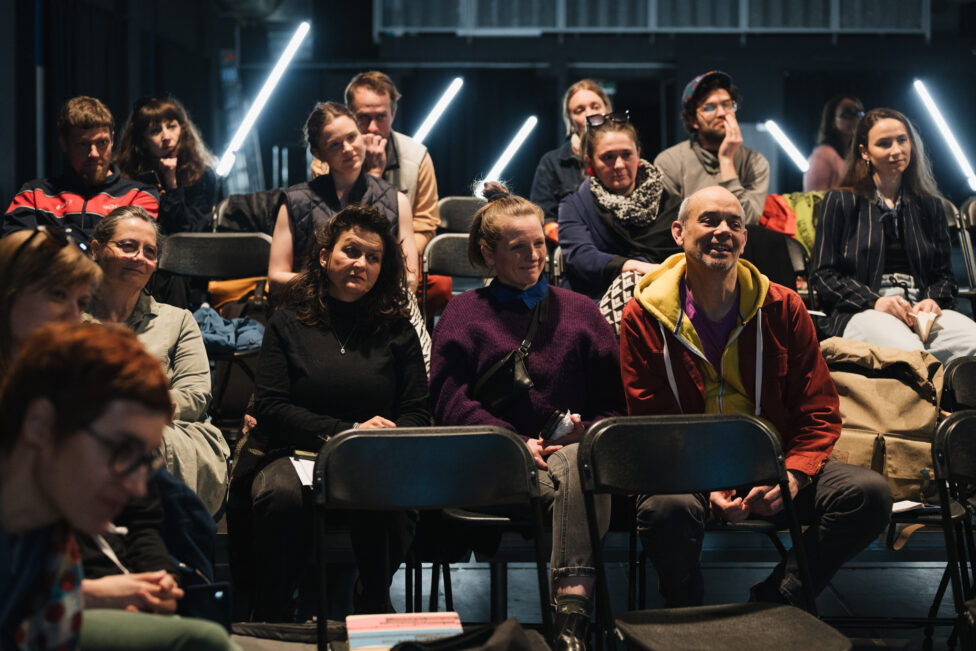
Performances presented by the Bazaar festival were well-chosen and distributed across the city, allowing a visitor like me a way to see several performance spaces and venues in neighborhoods I might never have known about. While the works themselves offered were a gratifying mix of new experiments and revivals that sometimes compelled and sometimes didn’t, the overall feeling of the festival were progressive, scrappy, Do-It-Yourself, enthusiastic, and humble. In one example, the slow-motion unfoldings of Sonja Pregrad’s “O” proposed the suspension of capitalistic time as a way to begin considering how small movements are indeed always still movements.
Here some interpretive artists overlapped in this performance as well as in another; this happened a few times during the Bazaar festival from what I could tell. The seemingly smallish number of participating interpreters, probably overworked as we all are these days, spoke to the expansive desire to create performance platforms and share theatrical ideas out to general publics, even as it also spoke to the need to continue expanding the ways that people can participate in the artistic creations that might be in the Bazaar festival in the future. People chose to perform in one or two or even three creative offerings in the festival to feel the social and creative ‘charge’ that comes from participating in creative actions, and also to demonstrate a competence to move in several ways and formations. This echoes how life surely arrives in the United States as well, where as Black American artists, we are constantly compelled to navigate competing structures of creativity, language, and audience with any number of simultaneous creative projects.
I hope that these comments are in some way useful to the process of GPS operations. I have only thanks and gratitude to offer to the terrific hosts for this adventure, and I will look forward to every opportunity to meet, share ideas and performances, and make performances together that will come soon enough.