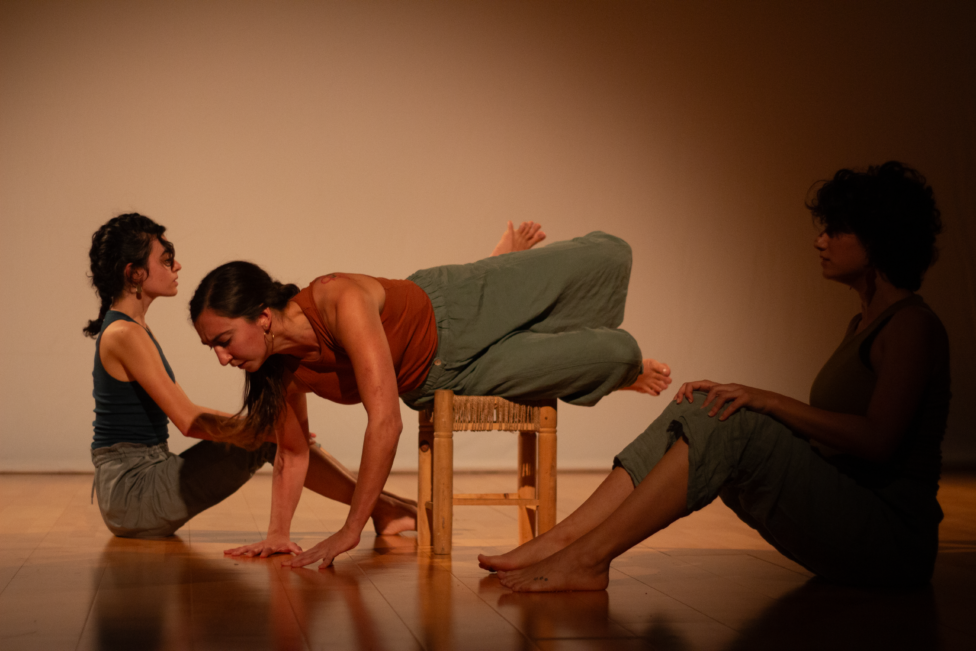
In the midst of the occupation of Minneapolis where neighbors were murdered while protecting their neighbors, this conversation took place on January 27th, 2026. We virtually met for two hours in a ‘gathering’ that defied multiple occupations and imperial and settler colonial lines determined to separate us. A connection that would, at this time, be impossible in-person on the lands of which we are rooted. Obstructions shaped by politics meant to block bodies in: motion, migration, meeting. Despite such contexts, artists know how to navigate around a winding path, and we found a ground to meet on even if the soil was floating in another dimension — an alternative reality — a dreamscape.
Myself in Minneapolis, Noora Baker in Ramallah, and Natasha Karam in Beirut.
In the process of editing and releasing this conversation in March 2026, our suspended dreamscape transformed into (recurring) nightmare. A reignited attack crashing down onto the peoples and lands in Lebanon, especially the south. Any past tense mentioning attacks on Lebanon in the conversation below have become an urgent present once again. As my feet meet the ground in a more-and-more intensifying defiant stance, I purposely choose not to include the name of the rogue state in this intro. I refuse to legitimize the illusion of their ongoing project of destroying our homelands and then calling us the terrorists.
Still we continue our conversation as bodies under bombardment. As bodies under occupation. They took our sky, and placed a border between us we could never walk across. Yet here, in this conversation, the three of us met under the olive tree on the land between Palestine and Lebanon – a vision Natasha shared with me once – and discussed this thing that binds us to each other, and to the land. Dance.
If you are a dancer based in the so-called United States, and are interested to activate your attention through action, please run swiftly towards: Dancers For Palestine.
To support people displaced by Zionist aggression in Lebanon, contribute to the mutual aid organized by the Lebanon Solidarity Collective.
– Leila Awadallah, CC guest editor
This article has been edited for the purpose of publication.
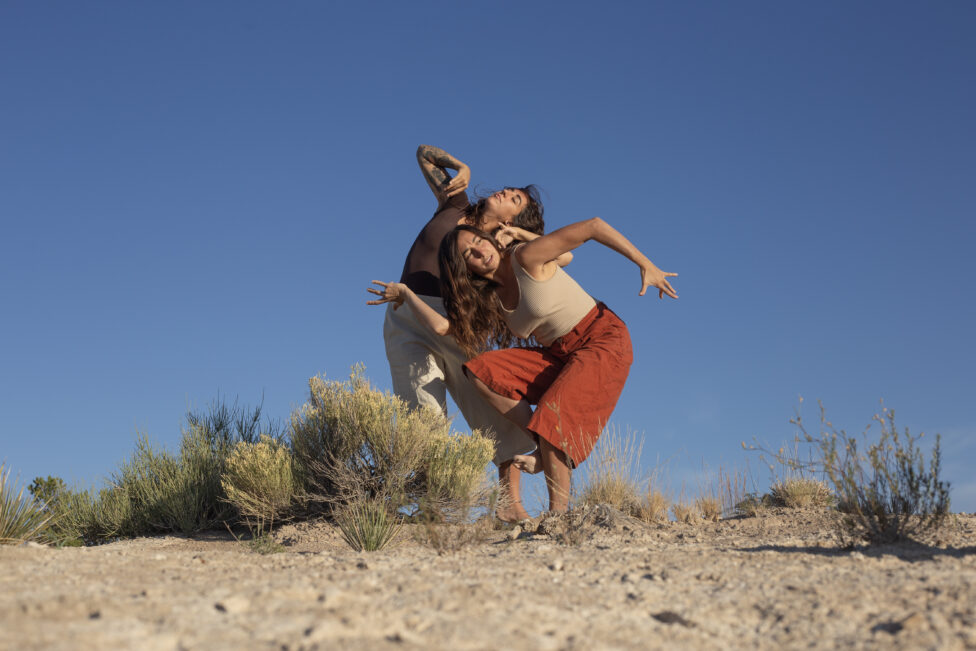
ON RECLAIMING SPACE | CHANNELING THE LAND
Leila Awadallah
Recently Natasha, we spoke about your idea to dance in the South of Lebanon near the border with Palestine. I don’t know how far you are in the project or where it will go, but I am curious to hear what it feels like for you to dance on that land, knowing that people are trying to revive the soil after it has been destroyed intentionally by persistent Israeli aggression?
Natasha Karam
This idea of making a dance film sprouted because I want to do a crowdfunding to support an agricultural project of rehabilitation or bio-remediation of the earth in the South of Lebanon. To gather resources for this project after the ongoing chemical attacks, destruction from bombs and heavy metals scattered from exploded buildings have destroyed the soil. These attacks are still ongoing since the ‘ceasefire’. Every day there has been a violation. And in the south of Lebanon, a lot of the people live from the land.
The idea is to try to share this situation without falling into stereotypes of “the victim.” Every time I go to the south I’m blown away by the beauty. It’s always a lesson in finding strength without trying and in always laughing back. That’s what I remember and I hold. How can I emphasize the reality of destruction, death and unimaginable pain while also showing the beauty, dignity and courage? So yeah, a film will be like a little window. Dancing there, just holding a camera there. I started thinking about it without really thinking about it.
I had doubts about using my own body to represent the South as I’m not from there. But I think these doubts and guilt are also part of this supposed separation that they’re trying to make us feel. I’m thinking: it’s also my land [the south]. It’s our land. Everyone’s land. Really, it’s the same people.
These are not our borders. They’re not ours. We didn’t make them.
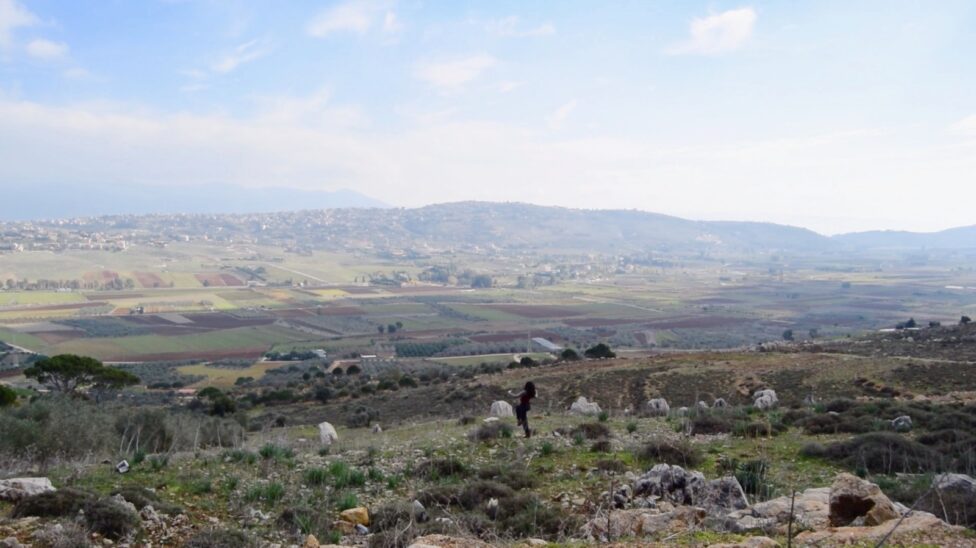
In the footage, you can see a valley of a village that’s half destroyed. Then you see Jabel el Sheikh in the background. Covered in snow, completely white. This is the reality that fascinates me. The absurdity of how so much violence and so much tenderness and love can coexist in the same world.
LA
How does all that contradiction take shape in your movement? What do you remember your body doing while improvising on the land? What do you see if you close your eyes and imagine yourself dancing there?
NK
I don’t know. I don’t think I want to close my eyes and see myself dancing there because when I’m there — I’m there to listen. And that’s all I want the dance to be.
Noora Baker
You have to feel it in real time.
NK
Yes. Oftentimes, the easiest way to do so is to zoom in, which is why I love the ground so much! The insects, the little things, because then it’s like the microcosm of everything else that’s around. Also there’s always the context that affects your body in that moment: what sounds you woke up to that day, the conversations that you had on the road. This is all part of the dance that comes.
NB
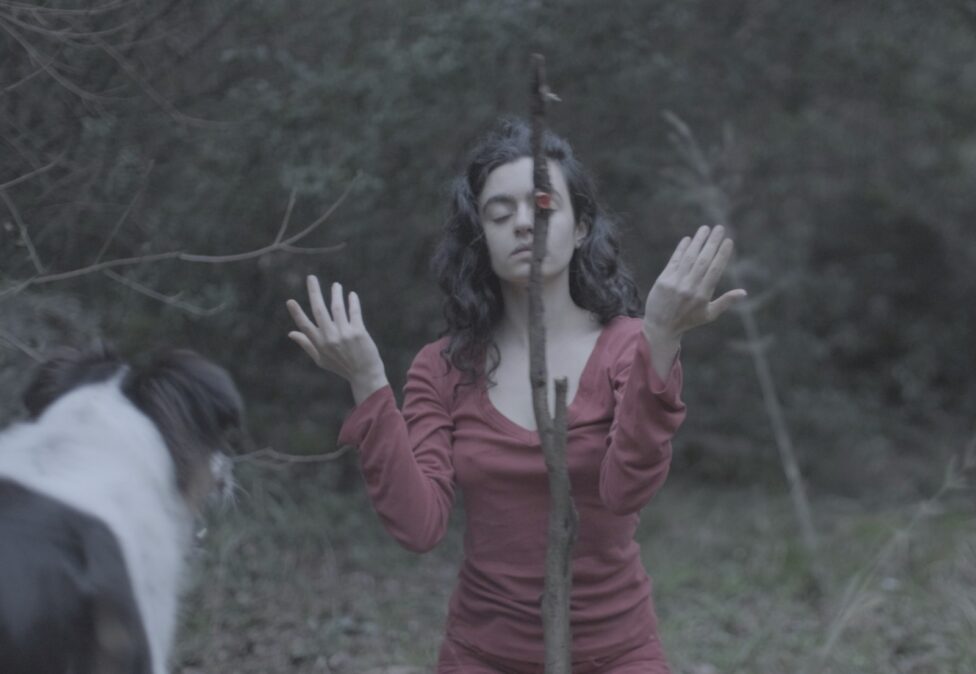
Natasha, I want to tell you something. The things you’re feeling about somebody who’s not from the south of Lebanon coming to the south to dance about what is happening there —this idea. This is very important to me as well. If I’m a Palestinian living in the West Bank, do I have the agency and right to represent what is happening in Gaza as my own story? I think there’s something here that needs questioning. However, to speak about how I feel in Ramallah in relation to the genocide in Gaza is very important. Because I am experiencing it. From here I can hear the bombs that drop on Gaza.
I cannot be or imagine myself in the place of Gazens but I can be representative of myself in Ramallah living under the same occupation inflicting the genocide of my people.
This is the conversation between us that needs to happen. We think of violence as an immediate and very visible thing to see, but I say the most dangerous is the one that is not seen. That is felt, psychological as well.
And if you break that kind of block [regarding which specific part of the land you are from], it’s interesting actually to see how your body responds to moving on a land that is yours. Indigenous to you. And how that speaks to the people who have actually been bombed. How it speaks to a Palestinian refugee that is also indigenous to this land, yet cannot actually stand on this land. To have a conversation with you. To meet there.
ON RHYTHM | THAT CAN SLOWLY RELEASE PAIN
NK
Noora, you were talking before about connection, it also made me think of rhythm, because I feel like rhythm is connection. When you pulse, when you pulse with someone else to the same rhythm. It’s so alive in our traditions. I think those feet rooted on the earth is such a big part of it. I was telling you, Leila, about my coming to terms with floorwork, which is very common in contemporary dance. I realized that I don’t want to glide on the floor and do all these wonderful, beautiful things. I’m not interested. I want to stand on my own two feet. I want to start from there, you know?
NB
When we do this kind of practice in a place where there’s ongoing violence against indigenous relationships to land, how do you continue to honor and bring back honor to this land? It just hit me while I’m listening to both of you, because this land has been abused so much. You feel that you need to bring respect. Offer a —I don’t want to say lamentation only because people died. There’s loss beyond [human life]. I think of practices of memory, but I was also interested in rhythm, because rhythm is life.
LA
I mean, rhythm is attuning our heartbeats. You know, that deep blood pumping source. Rhythm made visible, felt in our feet on the ground. I’m sensing you, you’re sensing me, and by that openness, we are changing.
NB
Yes and rhythm also can release the pain slowly. Loss, pain, trauma, where they resonate, let’s say in the body. Loss. I feel it in my back. The center of my back and the lower back. I physically feel it. So to release it you must understand your body. I need to move, but I’m focusing on this area, because I know it gets stuck there. This is one thing that rhythm can find a path slowly through these painful areas in the body. Same as the land, and through [dancing on] the land. It’s a research, like Natasha said: she needs it to happen there. While standing, maybe barefoot, on the ground, on the soil. So that the trauma and the pain becomes one with the land. Then, she can actually surpass this and become stronger.
NK
As you said the rhythm pulls out the grief, it directly makes me think about how today while walking in the forest, I had this vivid image of grief, like the waves of the sea. Rhythm is always there. It’s always pulsating. But sometimes, when you’re looking at the sea from far away enough, it looks still. It looks so calm. But it’s still moving. Grief is also always moving even when it appears quiet. And then sometimes it’s a storm, and wherever you go, you can’t run away from the crashing waves. The sea is always changing, but it’s just abundant and wide and dangerous and beautiful and deadly, and always in a rhythm. I kept thinking of that because today I was overwhelmed by a grief that didn’t have a name, which is, I think, very normal.
As soon as I moved back to Lebanon I realized that, ‘I want to dance’. I need to. I didn’t know why, but I knew I loved dance. I think it was this pull to being with, dancing with other people, or dancing for other people. There is this connection. You’re breathing the same air, you’re creating the art at the same time it’s happening, it’s instant. Based on time, on shared space, on shared rhythm. It was also just after experiencing the explosion in Beirut on 4th of August, 2020. I processed trauma through dance, and I think it saved me, actually.
LA
I’m curious about the role of dance. Dance takes so much energy, attention, intention, persistence. You’re going against so many logical things, even to dance. What is the role of dance in this moment in time? What can dance do or not do?
NK
I thought of two words, joy and honesty. Honesty, because there’s… I mean, it’s the hardest thing to do. There’s so many lies. And to be honest with yourself when you question the importance or the role of dance. If you try to be honest, whatever you do is justified. If you really search deep enough into honesty it will trickle into the reality that we’re living in because there’s no other way.
And joy, it’s so important. It’s the best way to fight back. I’ve been realizing that the dances that come from this land are the encapsulation of joy. Nothing can make me as happy. When there’s the darbake (drums), oud music, and singing, and I’m dancing with my feet and my hips and my chest and my hands. It’s joy.
NB
And it is resistance. Continue! Continuing your own work because you believe in it. So it doesn’t stop. There is always this debate of how it’s affected by this moment, and how can you shift towards a current context. Our recent production with El-Funoun started before the genocide. Yes it was affected, but it didn’t change in terms of the concept, urgency of subject and relevance, because we’re still talking about the same injustice. Sure, the moment of performance had to be postponed because of the genocide because it needs to. But bringing people together at the right moment is what you need to do to continue. Performance does that.
UNDER OCCUPATION | THE ECHOES THAT RUMBLE INSIDE A CHARGED VESSEL
NB
I want to read you something I wrote: “To work in culture and art, while living under occupation, is not a choice detached from struggle. It is an act of witness, a form of presence. Injustice carves its way into every detail of life, and so the artist cannot remain on the margins. The work must speak the language of the people, echo their questions, carry their burdens.” When I say people, it’s us also, because we’re not detached. “To create is not to escape, but to stay rooted, to walk alongside, to listen closely and draw on reality, not from the silence of distance, but from the present of where you stand.” That really explains a lot of how I think of the role [of dance].
LA
This reminds me of this idea “where are you standing,” which we keep circling back to in our conversation, not just as a personal me-and-myself standing, but how do I, in my firmness of knowing self, hold the burdens of my people? Or reflect the echoes of my people from a depth of also knowing where I stand?
NB
It gets me thinking of the periphery and the core of who you are. What is your essence? Why are you dancing? This is where I start. It’s not just for creation. It’s because you feel like you’re this vessel. Things need to come through you. It is very much connected to echoing what is happening around you, while you remain rooted.
LA
The word “echo” has felt really strong to me too. Echoes are created by sound bouncing off walls. Maybe the sound didn’t come directly from my voice, but it bounced off my body. It carries me, and I carry it, and we carry it on—the echo. In other contexts, I’ve heard dancers say things like, ‘I’m a vessel for the vision of the choreographer’ or something stupid that implies we are empty. But when you say vessel, I feel like it’s not this hollow tube. Rather it’s a thick portal: the information passes through who you are and what you know, and what you feel.
NB
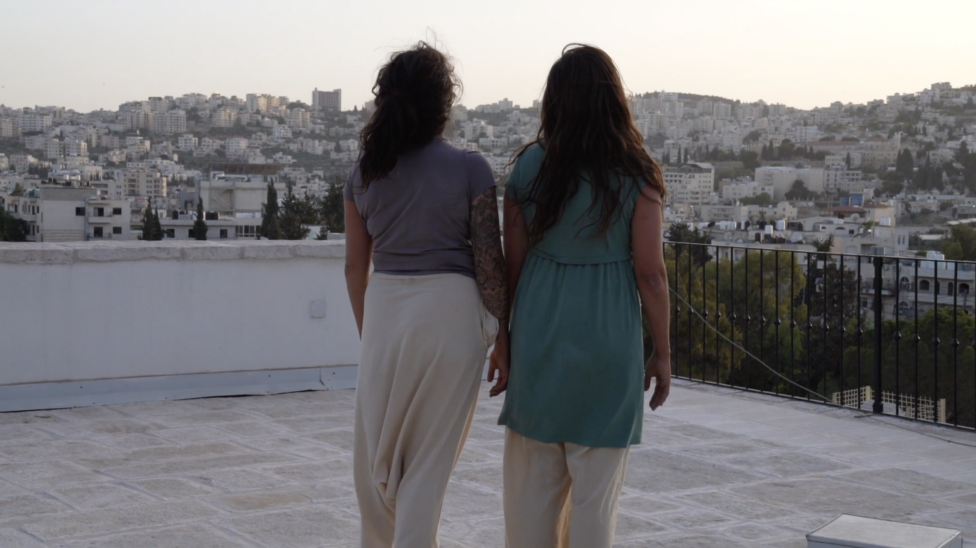
It’s like you saying when you’re dancing on the land in Palestine, Leila. You were so present that you allowed things to come through you. You can echo it. Get it out. So becoming a vessel. You are aware of how to meet the moment and to open a channel so that you can receive, and then communicate something. It’s coming from your connection and your presence of who you are and knowing why you’re doing it.
LA
Yes, yes, yes!
NB
I’m talking to you, and understanding it more!
LA
Me too, me too! I know, yeah.
FOLKLORE FRAGMENTS | VIOLENCE & DESTRUCTION | SEEKING SAME GROUND
NB
In the film A Night We Held Between by my collaborator Noor Abed, we were working on the land in Palestine with a ritual that you can follow — but in order to follow it, you must clean yourself and understand yourself. Because we carry all of this violence [in us]. We carry all of this love and problems, and all of that. So how do you also find the way into yourself? I feel we are vessels. Things come to us, but to listen to that, we need to practice.
LA
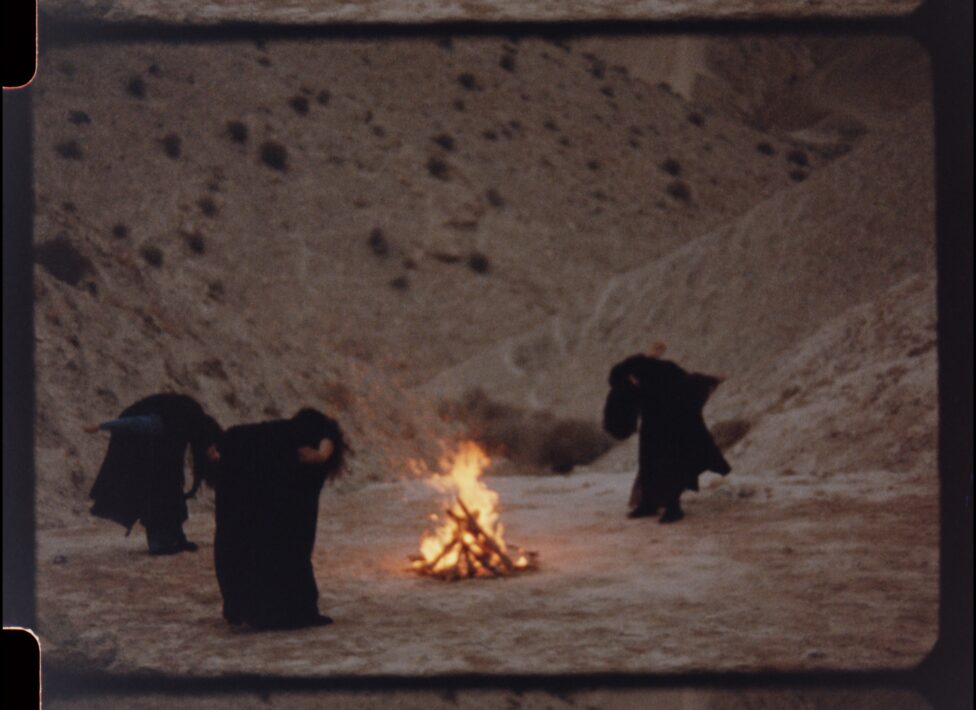
Noora, there’s a scene in the film where you and two other dancers are going around a fire repeating choreography. Can you share more about how that movement came to be, or what you were looking for?
NB
The part you saw had movements from a Palestinian wedding. A dance usually men do. They go up and down with a clap and this has a kind of rhythm, but we (Noor wanted it to be) turned it into a place for a ritual [reflecting on or anticipating] what is going to come next and what the morning will hold. We’re all women around the fire. This is how you can use folklore in a place that resonates within you to create something that can reach that particular feeling. [Folkloric] movement itself feels very organic within the body and very relatable for the people. Therefore it can transform into something else. It’s not about doing the folklore as is, but using it to find the feeling, then transforming it into something new.
That really works with our relation to the past. Dances from this land. The land of, we say, greater Syria, which is Palestine Syria, Lebanon, and Jordan, [which have] all been under occupation and separated by borders. We’ve [all] been violated for many, many years, but I don’t feel we’re independent, any of us. We’re very close. When the South of Lebanon was being bombed, we Palestinians were crying like it was on our own land. Because this is our land [too], and we know how it feels to hear those bombs. To [smell] that smell on the land. Of destruction.
If you’re not in the center of the destruction, you can easily forget it and hope as if it’s not there. But you as an artist, and somebody who is sensitive can really connect and say: ‘no, I need to find ways… I cannot stay on the periphery. I cannot witness this,’ And it’s this relationship that is so important: the body in the place. This is the urgency, I think, of an artist.
NK
I had a personal connection to a very, very dear friend, and their whole family, that come from the border. From there we can see Palestine, you know. The occupied villages. I spent a lot of time there before the war, and also after the war. I saw the process of absolute destruction, of a whole village, and many, many villages. So it’s an impossibility not to address this in everything that I do. I’m not a politician, I’m not a journalist, I’m not an activist, but I know that anything I do, anything I can do, anything I’m given the ability to do, it has to somehow trickle and address this.
NB
This is the unseen violence. I think this is what we suffer, all of us, the three of us. The way land is separated, the geographical mapping and architecture of spaces, and how the body moves within them. Places where one might perceive space luxury or a passageway that makes it easier for people are actually a place for surveillance, and separation.
LA
Violence creates such a severance from our sense of connection. A compartmentalizing of our bodies that happens when violence is so aggressive, so thick, and so day-to-day. I feel like dancing can be a site, almost like a battleground site, where we undo or disrupt or smoothen out the severance that we face on the land and in society. It’s a tunnel through layers of blocks towards ancestral memories. Towards new rehearsals for new visions for other ways of being.
In this day, when things feel apocalyptic as it has for a while, I think I’m curious to think about the role of dance, or dancing, or moving our bodies in this terrain that has been so cut up, and we’re just getting cut and cut. The land is cut, the people are cut. Everything cut, but our bodies are whole. But we run the risk of also, you know, our bodies fragmenting. Noora, you keep saying “connection,” “connection.” And I do really think, how do we stay in our bodies? How do we keep moving when the world is like this?
NB
Good question. The how is not to stop, for me, to continue. Hope is one scary word, I think, but a good word to have. But hope with conviction that things are gonna happen. I think this is connection. But it’s also dangerous. Connection needs to be with people who you are aiming to connect with. Not for a purpose of normalization of an occupier and an occupied into a kind of unequal relationship. That’s why it’s important that I come together with you guys. We’re already in a space where we feel that there’s a lot of injustice, and [meeting here] is where our body is free. We’re free to search and connect.
LA
Like meeting on a ground of which we all can stand on, in a way. Before we can find the possibility of the connection and dancing together, we have to have somewhat of a ground to share, because if you dance with an occupier and an occupied you’re not on the same ground.
NB
Yes, you need a safe space, like this conversation. Then it’s real, because we are equal. When I went to the Grief and Rage Circle for Palestine in Minneapolis, and the Indigenous dancers came to make an offering, and we spoke together. We felt that, both of us, we’re okay to speak together. Maybe next time, we can go a bit further in growing our interest and our relationship, because we understand where we’re coming from and the context we’re starting from. Not one of us wants to erase the other.